Ask any farmer who has worked the same field for twenty years, and they’ll tell you: the soil talks back. Yields slip a little each season. Pests that used to be occasional visitors start showing up every year. Fertilizer bags get bigger and the harvest doesn’t grow to match.
Nine times out of ten, the fix isn’t a new chemical or a costlier hybrid seed. It’s something far older and far cheaper — crop rotation.
Farmers across Punjab, Maharashtra, Tamil Nadu, and Bihar have relied on rotation for generations, long before soil scientists explained the nitrogen cycle in a lab. This guide walks through what crop rotation actually does to your soil, how to plan one that fits your region and water supply, and which mistakes undo the benefits without you realizing it. By the end, you’ll have a practical framework you can apply to your own fields this season.
Done right, crop rotation for Indian farmers is one of the few practices that improves both this year’s input bill and the next decade’s soil health at almost no extra cost.
Table of Contents
The Basics of Crop Rotation
What Is Crop Rotation?
Crop rotation means growing different crops in planned sequence on the same field, instead of planting the same crop season after season (monocropping). A simple example from North India: rice in kharif, wheat in rabi, and moong in the short summer window before the next rice crop goes in.
It sounds simple because it is. But the effect on soil health, pest pressure, and input costs is anything but small.
Why Does It Work?
Every crop interacts with soil differently.
Nutrient demand differs. Rice and wheat pull heavily on nitrogen. Legumes like moong, urad, and chana add nitrogen back through root nodules that host Rhizobium bacteria.
Root depth differs. Cotton and arhar send roots deep, breaking up compacted layers. Onion and groundnut work the top few inches. Alternating the two keeps soil structure open at multiple depths.
Pest and disease hosts differ. Continuous cotton builds up pink bollworm. Continuous paddy builds up stem borer. Switching to an unrelated crop starves these pests of a host and breaks the cycle without extra spraying.
This is the whole logic of rotation in one sentence: change the crop, and you change what the soil loses, what the pests eat, and what the weeds compete against.
Join a community dedicated to sustainable cultivation. Subscribe to FarmStories below for free, authentic insights into modern agri-tech and organic farming methods.
A Quick Historical Note
Before synthetic fertilizer became common in India in the 1960s and 70s, rotation with pulses was the primary way farmers maintained soil fertility. The Green Revolution’s focus on rice-wheat monocropping in Punjab and Haryana delivered huge yield gains initially, but decades of continuous cultivation without adequate rotation are a major reason groundwater tables in that belt have fallen so sharply.
Agricultural universities in Punjab and Haryana have spent years researching how to reintroduce diversity into this system without sacrificing farmer income — which is exactly why schemes like the Crop Diversification Programme exist today. The lesson from that experience is worth repeating: skipping rotation doesn’t save money, it just delays the bill. Sooner or later it comes due, in the form of a falling water table or exhausted soil.
How Rotation Differs from Intercropping and Mixed Cropping
It’s worth clearing up a common confusion. Crop rotation changes what’s grown on a field across seasons or years. Intercropping grows two or more crops at the same time on the same field (like maize and cowpea planted together). Mixed cropping is similar but usually without a fixed row pattern. All three practices can work together — many Indian farms use intercropping within a season and rotation across seasons — but they solve slightly different problems. Rotation is primarily about long-term soil and pest management; intercropping is more about maximizing land use and reducing risk within a single season.
How to Plan and Implement Crop Rotation
Step 1: Understand Your Soil Before You Plan
Before deciding what to rotate, get your soil tested. The Soil Health Card Scheme, run through your local Krishi Vigyan Kendra (KVK), gives you nitrogen, phosphorus, potassium, and micronutrient status for your specific field — this should shape your rotation, not guesswork.
A soil test typically costs very little (often free or nominal through government KVK centers) and takes 2–3 weeks for results. If your card shows low nitrogen and organic carbon, prioritize a legume or green manure crop in your next rotation cycle. If phosphorus or potassium is low, factor that into which crop follows, since some crops (like pulses) are more efficient at using residual phosphorus than others. Skipping this step is the single most common reason a rotation plan underperforms — farmers often copy a neighbor’s pattern without checking whether their own soil actually needs the same intervention.
Step 2: Apply the Core Rotation Rules
Alternate cereals with legumes. This is the single biggest lever for nitrogen management.
Avoid repeating crops from the same botanical family back-to-back. Tomato after potato, or mustard after cabbage, doesn’t help — both pairs share the same pest and disease vulnerabilities.
Alternate deep-rooted and shallow-rooted crops to keep soil structure open at different depths.
Build in a green manure or restorative crop every 2–3 years if fertility has been declining.
Match the rotation to your water availability, not the other way around.
Step 3: Choose a Region-Appropriate Pattern
Rotation isn’t one-size-fits-all across India’s agro-climatic zones — the right crop rotation for Indian farmers depends heavily on which region you’re in. Here’s what’s working in different belts:
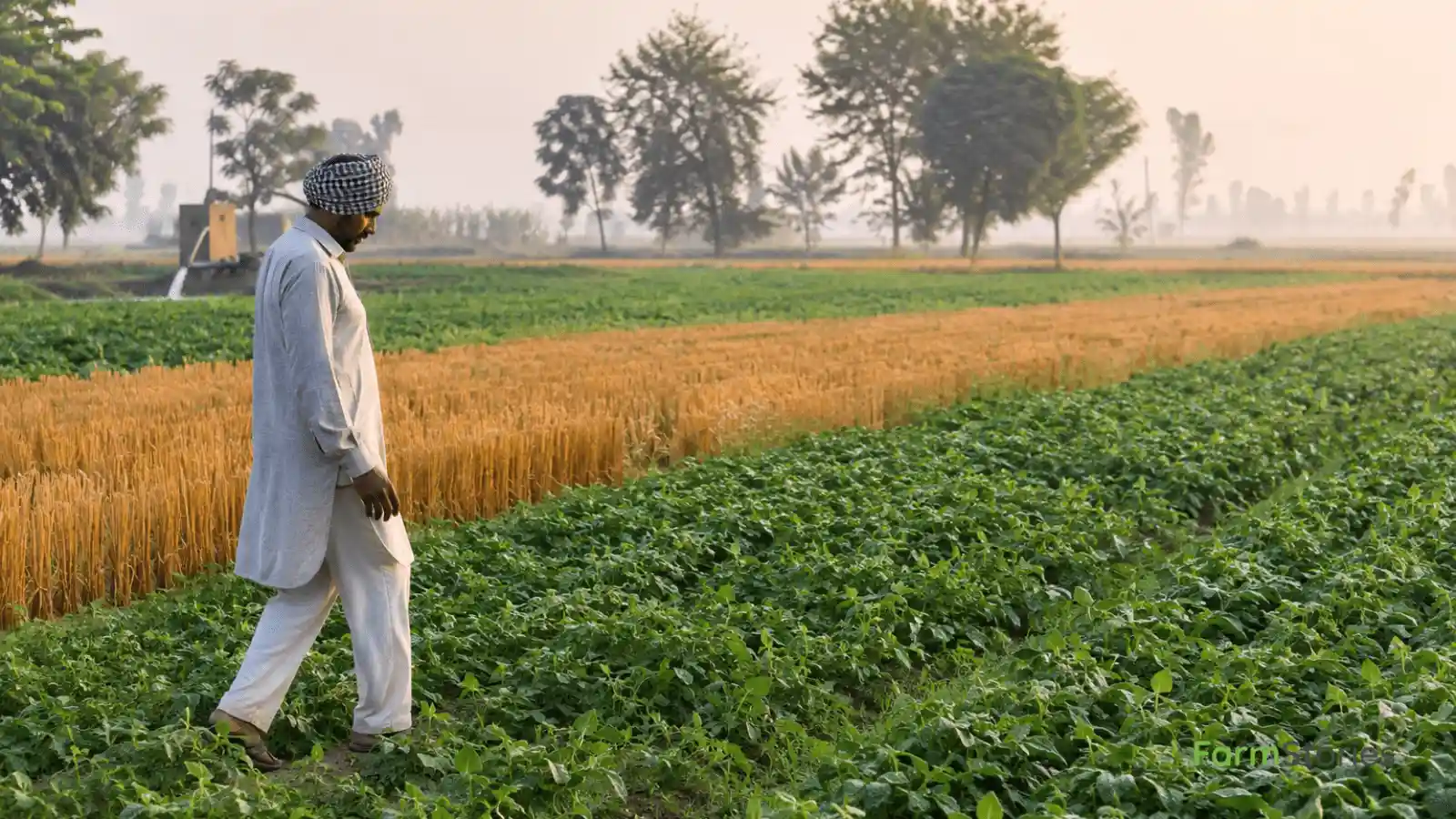
North India (Punjab, Haryana, Western UP) — irrigated plains The traditional Rice–Wheat rotation is now widely recognized as putting heavy pressure on groundwater. An improved version — Rice–Wheat–Moong (summer) — adds an extra income cycle and rebuilds nitrogen. Where water is tighter, Maize–Wheat or Cotton–Wheat rotations reduce dependence on paddy.
Central India (Madhya Pradesh, Maharashtra)Soybean–Wheat/Chana dominates the Malwa plateau. In black cotton soil (regur) tracts, Cotton–Chana or Cotton–Wheat rotations are standard.
Eastern India (Bihar, West Bengal, Eastern UP, Odisha)Rice–Wheat–Moong/Urad and Rice–Mustard–Moong use the short post-rice window productively. In West Bengal’s alluvial belt, Rice–Potato–Moong is common.
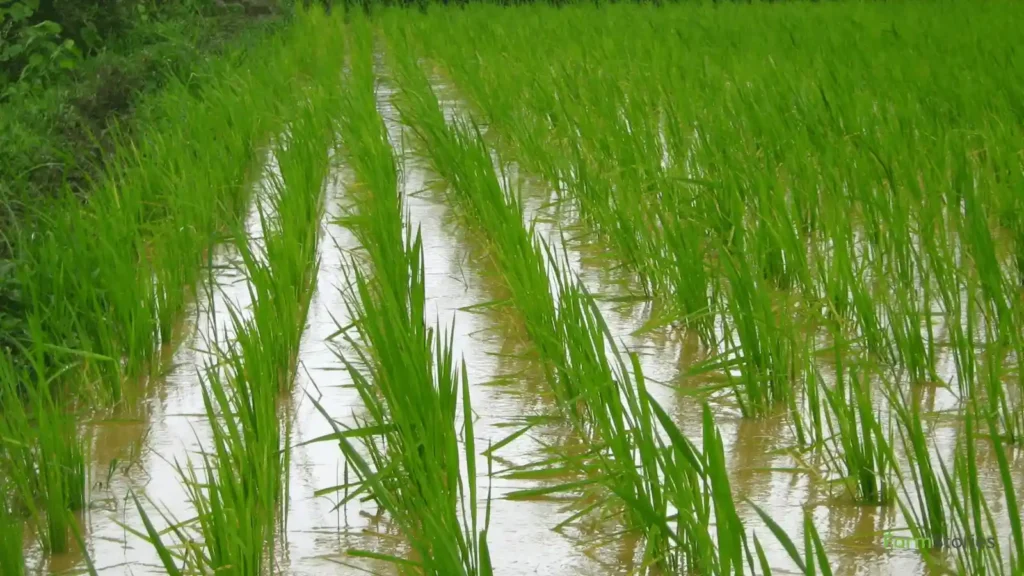
South India (Tamil Nadu, Andhra Pradesh, Karnataka, Kerala) Irrigated deltas favor Rice–Pulses (blackgram/greengram)–Rice. Rain-fed red soil zones use Groundnut–Sorghum or Cotton–Groundnut. Where sugarcane occupies land for a full year, a Sugarcane–Ratoon–Pulse cycle helps recover soil afterward.
Western India (Gujarat, Rajasthan)Groundnut–Wheat and Cotton–Wheat are common in Gujarat’s semi-arid tracts. In low-rainfall Rajasthan, Bajra–Chana performs reliably.
Hill and Northeastern StatesMaize–Rajma–Vegetables rotations exploit altitude-based growing windows. Traditional jhum (shifting cultivation) systems in parts of the Northeast rotate rice, maize, and millets across fallow cycles, though settled rotation systems are increasingly replacing this.
Step 4: Use Legumes and Catch Cropping Strategically
Season
Suitable Legume Crops
Kharif (monsoon)
Arhar (pigeon pea), Urad, Moong
Rabi (winter)
Chana (gram), Masoor (lentil), Pea
Zaid (summer)
Moong, Cowpea
Even a short 60–70 day pulse squeezed between two main crops — known as catch cropping — meaningfully improves nitrogen and gives you an extra harvest to sell. A farmer running Rice–Wheat in Western UP who adds summer moong can typically expect a modest but real reduction in urea requirement for the following rice crop, alongside the moong income itself.
Step 5: Green Manuring for Depleted Soils
If soil fertility has dropped sharply, replace a harvestable crop for one season with a green manure crop — dhaincha (Sesbania) or sunhemp are the most common choices. Grown for 6–8 weeks and ploughed back in while still green, these add organic matter and nitrogen directly. This step is especially valuable before a heavy feeder like sugarcane or paddy.
Safety Tips When Transitioning Crops
When switching from a crop you’ve sprayed heavily (like cotton) to a food crop like a pulse, allow the standard pre-harvest interval on your last pesticide application before sowing the next crop, and check the label for any soil residue guidance.
If you’re ploughing in a green manure crop like dhaincha, do it while the plant is still green and tender — woody stems break down slower and can tie up nitrogen temporarily instead of releasing it.
Store legume seed (moong, urad, chana) properly in a cool, dry place, since pulse seed is more prone to weevil damage than cereal seed if stored in humid conditions.
Costs and Time Involved
Rotation itself doesn’t add cost — in most cases it reduces total input spend, since a legume season needs less fertilizer than a cereal season. The main “cost” is planning time and, occasionally, a short-term yield adjustment in the first year or two as soil biology rebalances. Farmers who’ve made the shift generally report this pays back within 2–3 seasons through lower fertilizer bills and better prices for diversified produce.
Lower fertilizer costs through natural nitrogen fixation from legumes.
Fewer pest and disease outbreaks, reducing pesticide spend.
Better soil structure and water infiltration.
Weed suppression through varied cultivation patterns.
Income diversification, reducing risk from any single crop’s price crash or failure.
Real Example
In parts of Punjab’s rice-wheat belt, farmers who introduced summer moong into their rotation reported a visible improvement in soil texture and reduced urea dependence within a few seasons, alongside the added income from the moong crop itself — a pattern documented by several state agricultural university field trials on rice-wheat-legume systems.
Common Challenges in Crop Rotation
Market access for the “break crop.” A legume or oilseed is only useful if there’s a buyer nearby at a fair price — check local mandi demand before committing.
Short transition dip. The first rotation cycle sometimes shows a small yield adjustment as soil biology rebalances; this typically corrects within a couple of seasons.
Irrigation mismatch. A rotation that looks good on paper but assumes more water than is actually available will underperform.
Labor and equipment timing. Switching crops can mean different sowing and harvesting windows, which sometimes clashes with labor availability during peak seasons. Planning your rotation calendar alongside your labor calendar avoids last-minute scrambling.
Learning curve for a new crop. If you’ve grown wheat for fifteen years and are adding chana for the first time, expect a season of learning its specific pest, water, and harvest timing needs. Your local KVK can usually walk you through this at no cost.
Plan around these upfront and they stop being problems. Most farmers who treat rotation as a multi-year strategy, rather than a one-season experiment, find these early hurdles smooth out by the second or third cycle.
Common Mistakes to Avoid in Crop Rotation
Rotating within the same crop family (mustard after cabbage doesn’t break anything, since both are Brassicas).
Skipping soil testing and planning rotation on guesswork.
Relying entirely on cash crops like cotton or sugarcane without a break crop.
Ignoring local water availability when choosing the next crop.
Dropping legumes altogether in favor of higher-value crops, which increases long-term fertilizer dependence.
1. What is the best crop rotation for Indian farmers? There’s no single best rotation — it depends on your region, soil, and irrigation. But a cereal followed by a legume, such as Rice–Wheat–Moong, is the most broadly recommended pattern because it restores nitrogen while breaking pest cycles.
2. Why is crop rotation important in Indian agriculture?Crop rotation for Indian farmers restores soil fertility, reduces pest and disease buildup, improves soil structure, controls weeds, lowers input costs, and spreads a farmer’s financial risk across multiple crops instead of one.
3. Can rice and wheat be rotated with pulses? Yes. Adding a short-duration pulse like moong or urad after wheat harvest — catch cropping — is one of the most effective ways to rebuild soil nitrogen in the rice-wheat belt of North India.
4. How often should crops be rotated? Most farmers follow the kharif–rabi–zaid seasonal cycle within a year, with a longer 2–3 year plan that includes a green manure or restorative break crop.
5. Does crop rotation reduce fertilizer costs? Yes, generally. Legume seasons fix nitrogen naturally, which lowers the urea requirement for the cereal crop that follows.
6. Will crop rotation reduce my yield in the short term? Some farmers see a small adjustment in the first cycle as soil biology rebalances, but this typically corrects within 2–3 seasons and is usually offset by lower input costs and the added harvest from the rotation crop itself.
Generations of Indian farmers figured this out before soil science had a name for it, and the research since has mostly just confirmed what they already knew. For anyone watching fertilizer costs climb and yields plateau, the fix rarely needs to be complicated. Inserting even a single legume season into an existing cereal-heavy rotation is often enough to see a measurable difference within a few cycles.
Start with a soil test, pick one break crop suited to your region and water supply, and build from there. The signs are already there in your field — this season is a good time to act on them.
Want to see these techniques in action? Join our growing community of urban farmers by following farmstories on LinkedIn, Instagram, YouTube, and Facebook for daily tips, video guides, and harvest inspiration!