Trichoderma in Agriculture: A Complete Guide for Farmers

Trichoderma is a beneficial fungus widely used in agriculture to control soil-borne diseases, improve soil health, and promote stronger crop growth. Learn its benefits, application methods, dosage, and best practices in this comprehensive guide.

El Niño Farming in India: Why Adapting Today Can Build a Stronger Farm Tomorrow

El Niño Farming in India showing climate-smart farming practices to save water and increase farm income - integrated farming

El Niño Farming in India is changing how farmers prepare for uncertain weather. While El Niño can bring below-normal rainfall, higher temperatures, and water scarcity, it also creates an opportunity to adopt smarter, low-cost farming practices. This guide explains practical strategies to conserve water, improve soil health, reduce input costs, and diversify farm income without major investments. Learn how green manuring, mulching, broad bed furrow planting, intercropping, vermicomposting, backyard poultry, and other climate-smart techniques can help build a more resilient farm. Whether you are a smallholder or a commercial farmer, these proven methods can help you manage climate risks while improving long-term productivity and profitability. Discover how adapting to changing weather today can strengthen your farm for future seasons.


ICAR Signs MoU with Seychelles to Boost Agricultural Research and Climate-Smart Farming

ICAR signs MoU with Seychelles to strengthen agricultural research and climate-smart farming cooperation.

The ICAR signs MoU with Seychelles initiative marks a new chapter in agricultural cooperation between India and the island nation. The agreement, exchanged during Prime Minister Narendra Modi’s official visit to Seychelles, will strengthen collaboration in agricultural research, technology sharing, education, and climate-smart farming over the next five years. The Memorandum of Understanding (MoU) was … Read more

National Mission on Natural Farming: A Complete Guide to India’s Natural Farming Scheme

Indian farmer preparing jeevamrut under the National Mission on Natural Farming scheme, with a desi cow and diversified field visible nearby.

India’s natural farming scheme offers ₹4,000 per acre for two years — but the real question for farmers is whether the transition pays off. This guide covers eligibility, registration, real costs, and the mistakes to avoid before signing up.

Crop Rotation for Indian Farmers: A Complete Guide

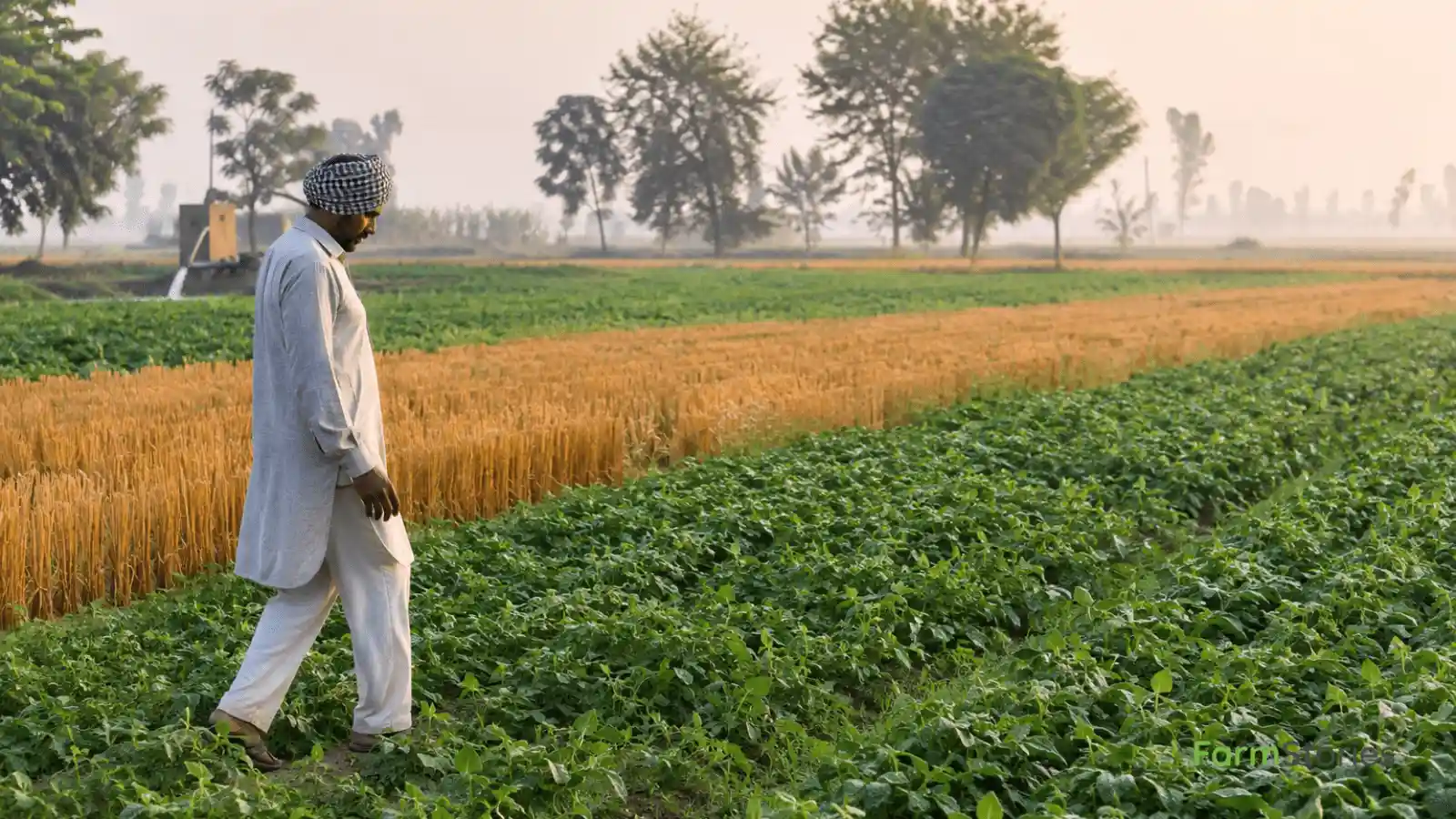
Indian farmer walking through a field showing crop rotation between wheat stubble and moong bean seedlings in Punjab, early morning light.

Most yield problems don’t need a new fertilizer — they need a different crop. This guide breaks down crop rotation for Indian farmers region by region, from Rice-Wheat-Moong in the north to Cotton-Chana in the black soil belt, plus the government schemes that support the shift.