Indian groundnut growers have a fresh reason to celebrate. Two new high-oleic groundnut varieties have just been cleared for cultivation, opening the door to better prices, higher yields, and a stronger edible oil economy for the country.
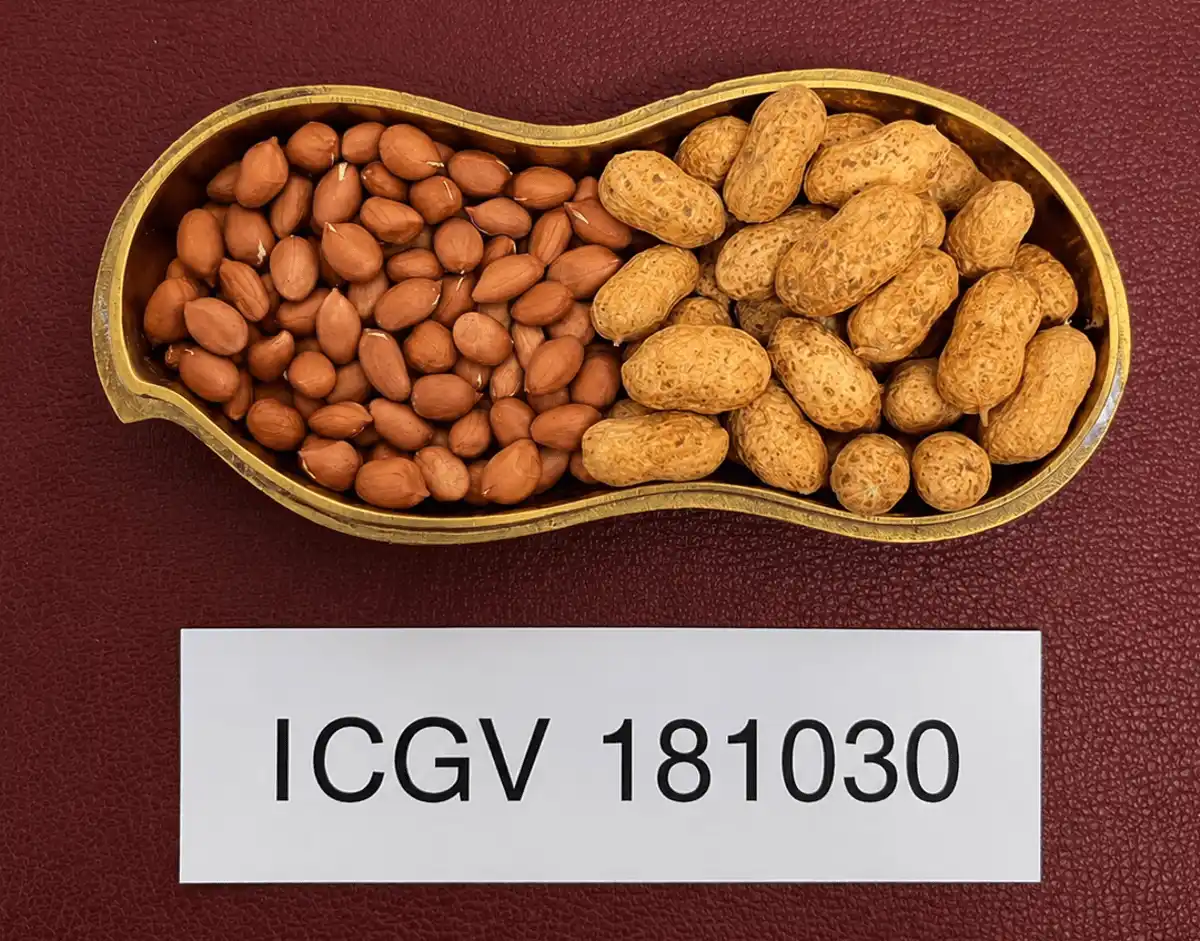
The Variety Identification Committee under the All India Coordinated Research Project on Groundnut, working under ICAR, approved ICGV 201214 and ICGV 181030 for national release at its Annual Group Meeting in Pune this April. One of the two, ICGV 181030, is the first high-oleic groundnut variety ever approved for India’s Northeastern States and Odisha.
India Gets Two New High-Oleic Groundnut Varieties to Lift Farmer Incomes
Both varieties were bred jointly by ICRISAT with state agricultural universities — ICGV 181030 with the University of Agricultural Sciences, Dharwad, and ICGV 201214 with Junagadh Agricultural University. High-oleic groundnuts carry far more oleic acid than regular varieties, which means the oil stays fresh longer, resists spoilage better, and offers stronger nutritional value. That combination has made such varieties increasingly attractive to food companies and health-conscious buyers alike, often fetching premium prices.
Why These High-Oleic Groundnut Varieties Stand Out
ICGV 181030 is suited for Kharif-season planting across Gujarat, Rajasthan, Maharashtra, Jharkhand, West Bengal, Odisha and the Northeast, and showed close to 78% oleic acid content along with meaningful yield gains over existing checks in field trials. ICGV 201214, recommended for Gujarat and Rajasthan, went further still, recording 81% oleic acid, over half its weight in oil, and a solid jump in kernel yield compared to a widely grown local variety.
ICRISAT’s Director General, Dr Himanshu Pathak, said these releases build on the earlier success of the Girnar 4 and Girnar 5 varieties and reflect what sustained partnerships between research institutions can achieve.
With India pushing to cut its edible oil import bill under the National Mission on Edible Oils–Oilseeds, these new varieties are expected to play a meaningful role — giving farmers a more profitable crop to grow, processors a better raw material to work with, and consumers a healthier oil to cook with.
Want to see these techniques in action? Join our growing community of urban farmers by following FarmStories on LinkedIn, Instagram, YouTube, and Facebook for daily tips, video guides, and harvest inspiration!
Join a community dedicated to sustainable cultivation. Subscribe to FarmStories below for free, authentic insights into modern agri-tech and organic farming methods.