Every farmer faces one common challenge during the crop season: protecting crops from pests without increasing production costs or harming the environment. Insects, mites, weeds, rodents, fungi, bacteria, and viruses can significantly reduce crop yields if they are not managed at the right time. Many farmers rely heavily on chemical pesticides for quick results, but repeated and excessive use can create new problems. Pests may develop resistance, beneficial insects can disappear, soil quality may decline, and pesticide residues may affect food safety.
This is where Integrated Pest Management (IPM) offers a practical and sustainable solution.
Integrated Pest Management is a scientific approach that combines different pest control methods to keep pest populations below economically damaging levels. Instead of depending solely on pesticides, IPM encourages farmers to monitor pest activity, protect natural predators, adopt preventive farming practices, and use chemicals only when absolutely necessary.
The goal is not to eliminate every insect in the field. Many insects are beneficial and play an important role in pollination and natural pest control. IPM helps farmers distinguish between harmful and beneficial organisms so that crop protection becomes more effective and environmentally responsible.
Across India, farmers are increasingly adopting Integrated Pest Management in crops such as rice, cotton, vegetables, pulses, sugarcane, fruits, and spices. Agricultural universities, Krishi Vigyan Kendras (KVKs), and government extension programs actively promote IPM because it reduces unnecessary pesticide use while supporting long-term farm productivity.
Whether you cultivate one acre or hundreds of hectares, understanding IPM can help you reduce production costs, improve crop health, and build a more resilient farming system.
In this guide, you’ll learn what Integrated Pest Management is, why it matters, its core principles, and how to apply it effectively on your farm.
Table of Contents
What is Integrated Pest Management (IPM)?
Integrated Pest Management (IPM) is a decision-based approach to managing pests using a combination of biological, cultural, mechanical, physical, and chemical methods. The aim is to minimize crop damage while reducing risks to people, animals, beneficial organisms, and the environment.
Join a community dedicated to sustainable cultivation. Subscribe to FarmStories below for free, authentic insights into modern agri-tech and organic farming methods.
Unlike conventional pest control, which often focuses on spraying pesticides as soon as pests appear, IPM begins with prevention and careful observation. Farmers regularly inspect their fields, identify the pest correctly, estimate the level of infestation, and choose the most appropriate control method based on scientific recommendations.
A key concept in IPM is the Economic Threshold Level (ETL). This refers to the pest population at which control measures should begin to prevent economic losses. Spraying pesticides before pests reach this level often wastes money and can accelerate pesticide resistance. By waiting until the ETL is reached and selecting the right intervention, farmers can achieve effective pest control with fewer chemical applications.
An effective IPM program typically includes:
Regular field scouting and pest monitoring.
Accurate identification of pests and beneficial insects.
Crop management practices that discourage pest outbreaks.
Conservation or release of natural enemies such as predators and parasitoids.
Mechanical and physical methods to reduce pest populations.
Judicious use of recommended pesticides only when other methods are insufficient.
This integrated approach protects crop yields while promoting healthier agroecosystems.
Why is Integrated Pest Management Important?
Pest management has become more challenging due to changing weather patterns, intensive farming practices, and repeated use of similar pesticides. Farmers now face issues such as resistant pest populations, secondary pest outbreaks, and increasing production costs.
Integrated Pest Management addresses these challenges through a balanced and preventive strategy.
1. Reduces Dependence on Chemical Pesticides
Frequent pesticide spraying can increase production costs and encourage pests to develop resistance. IPM reduces unnecessary applications by recommending pesticides only after monitoring confirms they are needed.
2. Protects Beneficial Insects
Not every insect in a field is harmful. Ladybird beetles feed on aphids, spiders consume many crop pests, lacewings prey on soft-bodied insects, and pollinators such as bees are essential for many fruit and vegetable crops.
IPM protects these beneficial organisms by avoiding indiscriminate pesticide use.
3. Improves Soil and Environmental Health
Excessive pesticide use can affect soil microorganisms, contaminate nearby water sources, and reduce biodiversity. By combining preventive and biological methods, IPM helps maintain healthier agricultural ecosystems.
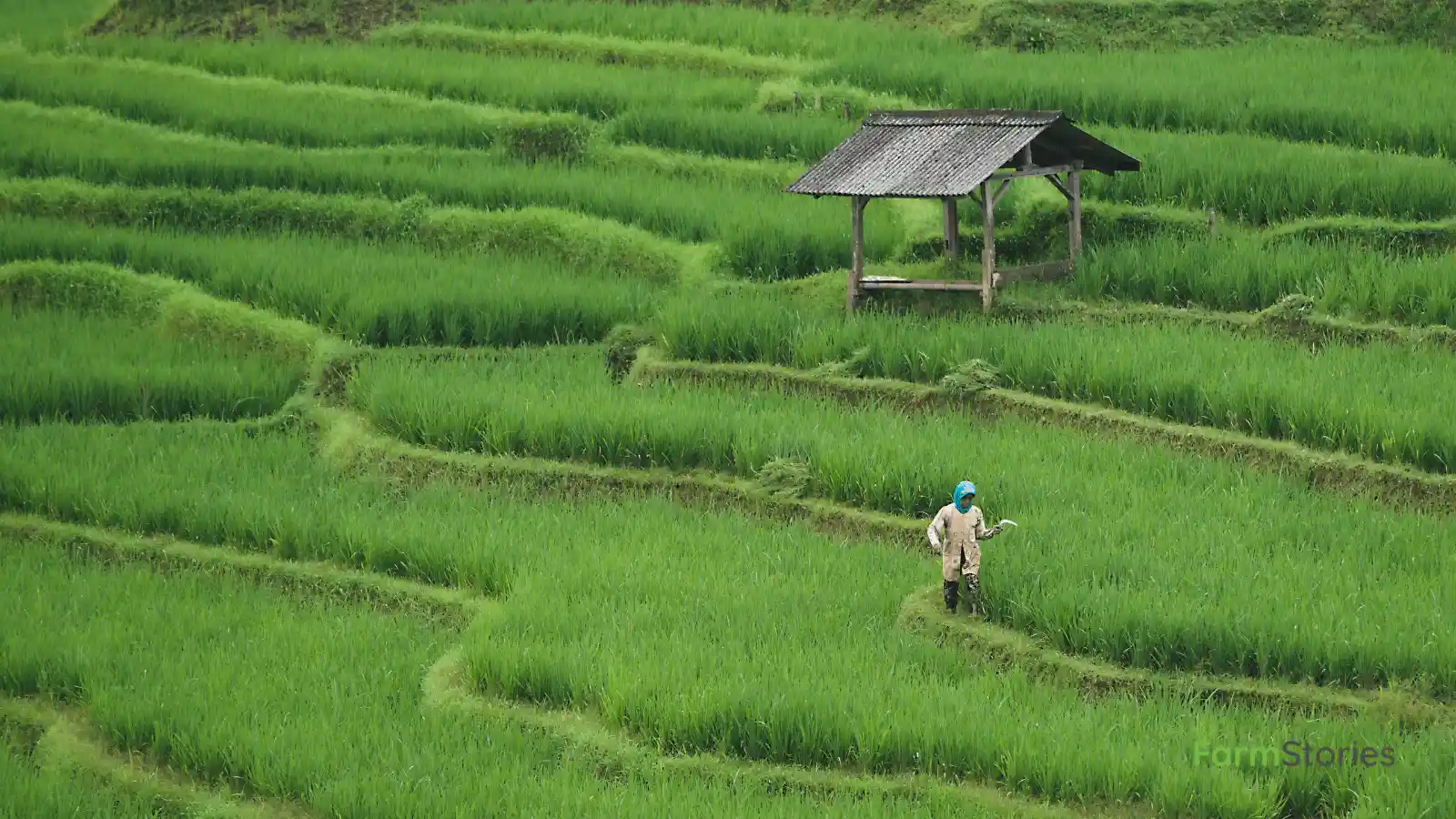
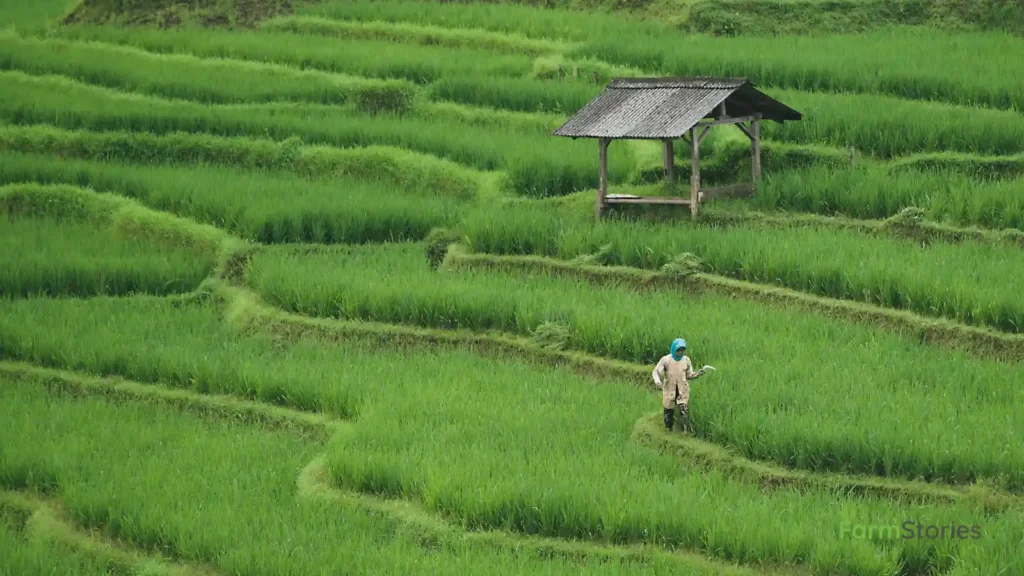
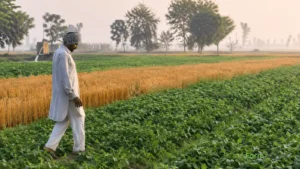
An Indian farmer monitoring crop health using Integrated Pest Management (IPM), combining pest monitoring, sticky traps, and natural pest control for sustainable farming.
4. Supports Sustainable Crop Production
Healthy soils, balanced insect populations, and responsible pesticide use contribute to long-term productivity. Farmers who adopt IPM often experience more stable yields over time while reducing environmental risks.
5. Produces Safer Food
Using pesticides only when necessary and following recommended waiting periods before harvest helps reduce pesticide residues on fruits, vegetables, and grains. This benefits both farmers and consumers.
6. Reduces Production Costs
Although IPM requires regular monitoring, it often lowers the overall cost of crop protection by reducing unnecessary pesticide purchases and applications.
7. Helps Manage Climate-Related Pest Challenges
Changing rainfall patterns and rising temperatures can influence pest populations. IPM encourages continuous monitoring and adaptive decision-making, making it easier to respond to changing pest pressures during different seasons.
Core Principles of Integrated Pest Management
Successful Integrated Pest Management is built on several key principles. These principles help farmers make informed decisions instead of relying on routine pesticide spraying.
The Food and Agriculture Organization (FAO) recommends Integrated Pest Management as a sustainable approach that combines biological, cultural, physical, and chemical tools to reduce pest risks while protecting human health and the environment.
Prevention Comes First
Preventing pest problems is always more effective than treating severe infestations later. Farmers can reduce pest pressure by:
Using certified, healthy seeds.
Selecting pest-resistant crop varieties where available.
Following recommended planting times.
Maintaining field sanitation.
Removing crop residues that may harbor pests.
Practicing crop rotation.
Managing irrigation and nutrient application properly.
Healthy crops are naturally better able to tolerate pest attacks.
Before taking any action, farmers should correctly identify the pest causing damage.
Misidentification can result in:
Wasted pesticide applications.
Failure to control the actual pest.
Harm to beneficial insects.
Increased production costs.
Whenever identification is difficult, farmers should seek guidance from agricultural extension officers or nearby Krishi Vigyan Kendras.
Regular Monitoring
Field scouting is one of the most important steps in IPM.
Farmers should inspect crops regularly to observe:
Pest populations.
Beneficial insects.
Disease symptoms.
Weed growth.
Crop condition.
Monitoring enables farmers to detect problems early and respond before major damage occurs.
Decision Making Based on Economic Threshold Levels
Finding a few insects in a field does not automatically justify pesticide application.
Instead, farmers compare pest populations with recommended Economic Threshold Levels (ETLs). Control measures are initiated only when the expected crop loss exceeds the cost of intervention.
This scientific approach prevents unnecessary pesticide use and reduces production costs.
Integrated Control Methods
Rather than relying on a single solution, IPM combines multiple compatible techniques to achieve effective pest control.
These include:
Cultural practices.
Biological control.
Mechanical and physical methods.
Responsible chemical control.
Combining methods often provides better long-term results than depending on pesticides alone.
Evaluation and Continuous Improvement
IPM does not end after one intervention.
Farmers should continue observing their fields to determine:
Whether pest populations have declined.
If beneficial insects have recovered.
Whether additional action is necessary.
How management practices can be improved for future seasons.
Keeping simple field records helps farmers refine their pest management strategies year after year.
Four Major Methods of Integrated Pest Management
The strength of Integrated Pest Management lies in combining multiple control methods instead of depending on a single solution. Every farm is different, and the most effective strategy often involves using several techniques together. This balanced approach helps reduce pest populations while minimizing environmental impact and preserving beneficial organisms.
1. Cultural Control
Cultural control involves farming practices that make it difficult for pests to survive, reproduce, or spread. These preventive measures form the foundation of any successful Integrated Pest Management program because they reduce the likelihood of major pest outbreaks.
Some effective cultural practices include:
Crop Rotation
Growing the same crop repeatedly in the same field allows pests to establish permanent populations. Rotating crops interrupts their life cycle and reduces the carryover of pests and diseases from one season to the next.
For example:
Rotate rice with pulses where suitable.
Alternate solanaceous vegetables like tomato with legumes or leafy vegetables.
Avoid planting the same crop family continuously.
Selecting Resistant Varieties
Many crop varieties have been developed to tolerate or resist specific insects and diseases. Choosing these varieties reduces pest pressure and often lowers the need for chemical treatments.
Always select certified seeds recommended for your region.
Timely Sowing
Planting crops during the recommended sowing window helps them avoid periods when pest populations are at their peak.
For example, delayed sowing in several crops can increase exposure to stem borers, aphids, or other seasonal pests.
Balanced Fertilizer Application
Excessive nitrogen encourages lush, tender growth that attracts sap-sucking insects such as aphids, whiteflies, and leafhoppers.
Follow soil test recommendations and apply nutrients in balanced proportions.
Overwatering creates favorable conditions for many fungal diseases and root pests, while water stress weakens crops and makes them more vulnerable to insect attacks.
Efficient irrigation supports healthy plant growth and reduces pest-related stress.
Field Sanitation
Clean fields are less attractive to pests.
Good sanitation practices include:
Removing infected plants.
Destroying heavily infested crop residues.
Eliminating volunteer plants.
Controlling weeds around field boundaries.
Cleaning farm tools regularly.
These simple practices significantly reduce sources of infestation.
Biological control uses living organisms to suppress pest populations naturally. This is one of the most environmentally friendly components of Integrated Pest Management.
Instead of killing every insect, biological control encourages natural balance within the farming ecosystem.
Predators
Predators feed directly on harmful pests throughout their life cycle.
Common beneficial predators include:
Ladybird beetles feeding on aphids.
Green lacewings attacking aphids, mealybugs, and whiteflies.
Spiders feeding on many crop insects.
Dragonflies reducing flying insect populations.
Praying mantises consuming caterpillars and other insects.
Protecting these beneficial species reduces dependence on pesticides.
Parasitoids
Parasitoids lay their eggs inside or on pest insects. As the immature parasitoids develop, they kill the host.
One widely used example is Trichogramma, a tiny wasp released to manage the eggs of stem borers and caterpillars in crops such as rice, maize, and sugarcane.
Microbial Control
Some naturally occurring microorganisms infect and kill specific pests without harming crops.
Common examples include:
Bacillus thuringiensis (Bt) for caterpillars.
Beauveria bassiana against whiteflies and beetles.
Metarhizium anisopliae for termites and certain soil insects.
Nuclear Polyhedrosis Virus (NPV) against caterpillar pests in crops like cotton.
These biological agents are widely used in organic and sustainable farming systems.
Conserving Natural Enemies
Farmers can encourage beneficial insects by:
Avoiding broad-spectrum pesticide sprays.
Planting flowering border plants.
Preserving hedgerows.
Maintaining ecological diversity around fields.
A healthy ecosystem naturally keeps many pest populations under control.
Mechanical and physical methods remove or block pests without relying on chemicals.
These techniques are especially effective during the early stages of infestation.
Hand Picking
Large insects, caterpillars, egg masses, and infected plant parts can be manually removed in smaller farms and kitchen gardens.
Although labor-intensive, this method is inexpensive and environmentally safe.
Light Traps
Light traps attract many night-flying insects, allowing farmers to monitor pest populations and reduce adult insect numbers.
They should be used mainly for monitoring rather than as the sole control method.
Sticky Traps
Yellow sticky traps are effective for monitoring and reducing populations of:
Whiteflies
Aphids
Leaf miners
Blue sticky traps are commonly used against thrips.
These traps provide early warning before infestations become severe.
Pheromone Traps
Pheromone traps use species-specific scents to attract male insects.
They help farmers:
Detect pest activity early.
Monitor pest populations.
Reduce mating success in certain pest species.
Pheromone traps are widely used in vegetable crops, cotton, sugarcane, and fruit orchards.
Physical Barriers
Physical protection methods include:
Insect-proof nets.
Row covers.
Fruit bagging.
Protective screens in nurseries.
These barriers prevent pests from reaching crops while allowing normal plant growth.
4. Chemical Control
Chemical pesticides remain an important tool within Integrated Pest Management, but they are considered the final option rather than the first response.
Pesticides should only be applied when monitoring indicates that pest populations have exceeded the Economic Threshold Level (ETL).
Responsible pesticide use includes:
Selecting pesticides recommended for the target pest.
Following label instructions carefully.
Using the correct dosage.
Rotating pesticide groups to reduce resistance.
Wearing appropriate protective equipment.
Respecting the recommended waiting period before harvest.
Avoid routine calendar-based spraying without monitoring. Unnecessary pesticide applications increase costs, harm beneficial insects, and accelerate resistance development.
Step-by-Step Integrated Pest Management Process
Implementing Integrated Pest Management becomes much easier when farmers follow a structured process throughout the crop season.
Step 1: Plan Before Planting
Preparation begins even before sowing.
Farmers should:
Select healthy seeds.
Choose resistant varieties where available.
Prepare well-drained fields.
Follow recommended crop rotation.
Remove weeds and crop residues.
Improve soil fertility through balanced nutrient management.
Strong crops are naturally more resilient against pest attacks.
Step 2: Monitor the Crop Regularly
Regular scouting is the backbone of Integrated Pest Management.
Inspect the field at least once or twice each week.
Observe:
Leaves
Stems
Flowers
Fruits
Soil surface
Root zone where applicable
Look for:
Feeding damage
Eggs
Larvae
Adult insects
Disease symptoms
Beneficial insects
Early detection allows timely intervention.
Step 3: Identify the Pest Correctly
Before taking action, determine:
Which pest is present?
Which crop stage is affected?
What level of damage has occurred?
Are beneficial insects already controlling the pest?
Incorrect identification often results in unnecessary pesticide applications.
When unsure, consult local agricultural experts or Krishi Vigyan Kendras.
Step 4: Compare with Economic Threshold Levels
Not every pest requires treatment.
Farmers should compare observed pest populations with recommended ETLs issued by agricultural research organizations.
If pest numbers remain below the threshold, continued monitoring may be sufficient.
If populations exceed the threshold, suitable control measures should be implemented promptly.
Step 5: Select the Most Suitable Control Method
Choose the least disruptive option first.
In many situations:
Cultural methods may solve the problem.
Biological control may provide sufficient suppression.
Mechanical removal may be enough during early infestations.
Chemical pesticides should only be used when necessary and should complement, not replace, other IPM practices.
Step 6: Evaluate the Results
After implementing control measures:
Revisit the field.
Assess pest numbers.
Monitor beneficial insects.
Record observations.
Improve future management decisions based on experience.
Good record-keeping helps farmers recognize recurring pest problems and refine their Integrated Pest Management strategies over time.
Monitoring and Pest Identification
Successful Integrated Pest Management depends on accurate information rather than assumptions.
Farmers should maintain simple field records that include:
Record
Purpose
Date of inspection
Track seasonal pest activity
Crop growth stage
Understand vulnerable periods
Pest observed
Identify recurring infestations
Beneficial insects present
Assess natural pest control
Weather conditions
Relate pest outbreaks to climate
Control measures used
Evaluate effectiveness
Results after treatment
Improve future decisions
Keeping these records makes pest management more precise and helps reduce unnecessary pesticide applications year after year.
Adopting Integrated Pest Management offers advantages that go beyond controlling pests. It supports long-term farm productivity, reduces unnecessary expenses, and promotes environmentally responsible agriculture. Farmers who consistently follow IPM principles often notice improvements in crop health, soil quality, and overall farm sustainability.
Reduces Pesticide Use
One of the biggest benefits of Integrated Pest Management is reducing unnecessary pesticide applications. Instead of spraying crops on a fixed schedule, farmers make decisions based on field observations and Economic Threshold Levels (ETLs).
This approach helps lower production costs while reducing pesticide exposure for farmers, consumers, and the environment.
Slows Pest Resistance
Repeated use of the same pesticide can cause pests to develop resistance, making products less effective over time.
IPM minimizes this risk by:
Rotating pesticide groups.
Combining biological and cultural methods.
Using chemicals only when required.
As a result, available pesticides remain effective for a longer period.
Protects Beneficial Organisms
Many insects naturally keep pest populations under control. Ladybird beetles, lacewings, spiders, parasitoid wasps, and pollinators play an important role in healthy farming ecosystems.
Since Integrated Pest Management avoids indiscriminate pesticide use, these beneficial organisms continue contributing to natural pest suppression.
Improves Crop Quality
Healthier plants generally produce better-quality fruits, vegetables, and grains. By preventing severe pest damage while minimizing chemical residues, IPM helps farmers produce crops that meet both domestic and export quality standards.
Promotes Environmental Sustainability
Excessive pesticide use can contaminate soil, water bodies, and surrounding vegetation. IPM reduces environmental pollution by encouraging preventive measures and targeted interventions.
Healthy biodiversity also improves ecosystem resilience against future pest outbreaks.
Supports Long-Term Farm Profitability
Although IPM requires regular monitoring, it often reduces overall production costs through:
Lower pesticide expenses.
Reduced crop losses.
Better marketable yields.
Improved soil health.
For many farmers, these long-term benefits outweigh the additional effort required for field scouting.
Challenges and Limitations of Integrated Pest Management
Like any farming approach, Integrated Pest Management has certain challenges. Understanding these limitations helps farmers plan realistic implementation strategies.
Requires Regular Field Monitoring
IPM depends on timely field inspections rather than routine pesticide spraying.
Farmers need to:
Observe crops regularly.
Identify pests accurately.
Record field conditions.
Make informed decisions.
Without regular monitoring, pest outbreaks can become difficult to control.
Knowledge and Training Are Essential
Successful IPM requires farmers to recognize:
Harmful insects.
Beneficial insects.
Disease symptoms.
Economic Threshold Levels.
Appropriate control methods.
Agricultural training programs, Krishi Vigyan Kendras (KVKs), and extension services can help build these skills.
Biological Control Takes Time
Unlike chemical pesticides that often provide rapid results, biological control agents require time to establish and suppress pest populations.
Farmers should remain patient and continue monitoring rather than expecting immediate reductions.
Weather Can Influence Results
Heavy rainfall, prolonged humidity, drought, and temperature fluctuations affect pest populations as well as biological control agents.
IPM strategies should therefore be adjusted according to local weather conditions and crop stages.
Initial Planning May Require Extra Effort
Setting up pheromone traps, maintaining records, learning pest identification, and following preventive practices require commitment.
However, these efforts often become routine after one or two cropping seasons.
Integrated Pest Management Examples in Indian Crops
IPM is successfully used across many agricultural systems in India. While specific recommendations vary by crop and region, the following examples illustrate how different IPM methods work together.
Paddy (Rice)
Common pests:
Stem borer
Brown planthopper
Leaf folder
Typical IPM practices include:
Growing recommended resistant varieties.
Maintaining balanced fertilizer application.
Installing pheromone traps for monitoring.
Conserving spiders and parasitoids.
Applying insecticides only when ETLs are exceeded.
Cotton
Common pests:
Pink bollworm
Whitefly
Aphids
IPM practices include:
Regular field scouting.
Pheromone traps.
Refuge planting where recommended.
Removal of infested plant parts.
Judicious pesticide rotation to delay resistance.
Tomato
Common pests:
Fruit borer
Whitefly
Thrips
IPM methods include:
Yellow sticky traps.
Crop sanitation.
Biological control agents.
Timely irrigation.
Targeted pesticide application only when necessary.
Brinjal (Eggplant)
Common pests:
Shoot and fruit borer.
Aphids.
Jassids.
Recommended IPM measures include:
Pheromone traps.
Removal of damaged shoots.
Conservation of natural predators.
Timely harvesting.
Need-based insecticide application.
Sugarcane
Common pests:
Early shoot borer.
Internode borer.
Pyrilla.
IPM practices involve:
Healthy seed material.
Trash management.
Release of biological control agents.
Proper irrigation.
Field monitoring throughout the growing season.
Although management practices differ by crop, the principle remains the same: combine preventive, biological, mechanical, and chemical measures for effective pest management.
Common Mistakes Farmers Make
Even farmers who understand Integrated Pest Management sometimes make avoidable mistakes that reduce its effectiveness.
Spraying Without Identifying the Pest
Applying pesticides without confirming the actual pest often wastes money and may fail to solve the problem.
Ignoring Beneficial Insects
Many beneficial insects are mistakenly treated as pests.
Destroying natural predators can actually increase future pest outbreaks.
Applying Excessive Nitrogen Fertilizer
Overuse of nitrogen encourages soft plant growth that attracts many sucking pests.
Balanced fertilization is an important part of IPM.
Waiting Too Long
While unnecessary spraying should be avoided, delaying action after ETLs have been exceeded can lead to significant crop losses.
Regular monitoring helps farmers act at the right time.
Using the Same Pesticide Repeatedly
Repeated application of a single active ingredient accelerates resistance development.
Always rotate pesticides according to their mode of action whenever chemical intervention becomes necessary.
Best Practices for Successful Integrated Pest Management
To achieve consistent results, farmers should make these practices part of every cropping season:
Keep fields free from weeds and infected crop residues.
Use pheromone and sticky traps for monitoring.
Encourage biological control by protecting natural enemies.
Follow soil test recommendations for nutrient management.
Apply pesticides only after Economic Threshold Levels are reached.
Follow label instructions and safety precautions during pesticide application.
Review pest management results after each season and improve future plans.
Small improvements made consistently can significantly reduce pest problems over time.
Frequently Asked Questions
What is the main objective of Integrated Pest Management?
The primary objective of Integrated Pest Management is to keep pest populations below economically damaging levels while minimizing risks to human health, beneficial organisms, and the environment.
Does IPM in agriculture completely eliminate pesticide use?
No.
IPM encourages responsible pesticide use only when necessary. Chemical control remains one component of the overall strategy but should never be the only method used.
Is Integrated Pest Management methods suitable for small farmers?
Yes.
Many IPM practices, such as crop rotation, field sanitation, pest monitoring, sticky traps, and biological control, can be adopted on farms of any size.
Can IPM be used in organic farming?
Yes.
Organic farming relies heavily on preventive, cultural, biological, and mechanical pest management methods that align closely with IPM principles. However, conventional IPM may also include approved chemical pesticides when required.
How often should farmers inspect their fields?
Most crops should be monitored at least once or twice a week. During periods of high pest activity or favorable weather for outbreaks, more frequent inspections may be necessary.
Protecting crops does not always require frequent pesticide spraying. The most successful farmers focus on prevention, observation, and informed decision-making. Integrated Pest Management provides a practical framework that combines scientific knowledge with field experience to manage pests efficiently while protecting crop productivity.
By adopting cultural practices, encouraging natural enemies, using mechanical tools, monitoring pest populations carefully, and applying pesticides only when necessary, farmers can reduce production costs, improve environmental sustainability, and maintain healthier crops throughout the season.
Whether you grow rice, vegetables, fruits, cotton, pulses, or plantation crops, Integrated Pest Management offers a reliable approach to achieving long-term agricultural success. Start with simple practices, monitor your fields regularly, and continue improving your pest management strategy with every cropping season.
Want to see these techniques in action? Join our growing community of urban farmers by following farmstories on LinkedIn, Instagram, YouTube, and Facebook for daily tips, video guides, and harvest inspiration!