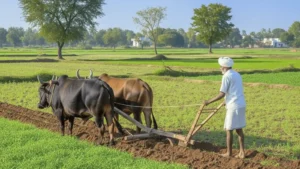
Regenerative Farming in India is gaining attention as farmers look for practical ways to reduce cultivation costs, improve soil health, and cope with unpredictable weather. Rising fertilizer prices, declining soil fertility, water scarcity, and climate events such as El Niño are making farming more challenging, particularly for small and marginal farmers who depend on limited land for their livelihood.
India has more than 86% small and marginal landholdings, according to the latest Agriculture Census. For many of these farmers, even a small drop in yield can affect household income. A delayed monsoon, an unexpected heatwave, or heavy rainfall during harvest can turn an entire season into a financial loss.
At the same time, many agricultural soils have lost organic matter after years of continuous cultivation, residue burning, excessive tillage, and imbalanced fertilizer use. As soil quality declines, crops require more water and nutrients to maintain production. This increases farming costs while reducing long-term productivity.
Regenerative Farming in India offers a different approach. Instead of relying mainly on external inputs, it focuses on restoring the natural strength of the farm. Healthy soil, crop diversity, composting, agroforestry, water conservation, and biological processes work together to create a farming system that becomes more resilient over time.
Unlike approaches that concentrate only on crop production, regenerative farming looks at the entire farm ecosystem. The objective is to improve the condition of the land after every season while maintaining productive agriculture. Healthier soils store more water, support beneficial microorganisms, reduce erosion, and help crops tolerate periods of weather stress more effectively.
For farmers cultivating less than one acre, regenerative farming can also improve income stability. Rather than depending on a single seasonal crop, farmers can combine vegetables, fruit trees, pulses, spices, livestock, beekeeping, compost production, and value-added products to create multiple sources of revenue throughout the year.
This guide explains what Regenerative Farming in India is, why it is becoming increasingly important, how it supports farmers during climate events such as El Niño, and how small landholders can adopt practical regenerative practices to build healthier soils, lower production costs, and create more resilient farm businesses.
What Is Regenerative Farming in India?
Regenerative Farming in India is an agricultural approach that restores soil health, improves biodiversity, conserves water, and strengthens natural ecological processes while producing food. Instead of simply maintaining existing resources, regenerative farming aims to improve the condition of farmland year after year.
Join a community dedicated to sustainable cultivation. Subscribe to FarmStories below for free, authentic insights into modern agri-tech and organic farming methods.
The word regenerative means “to restore” or “to renew.” In agriculture, this means leaving the soil healthier after each growing season than it was before.
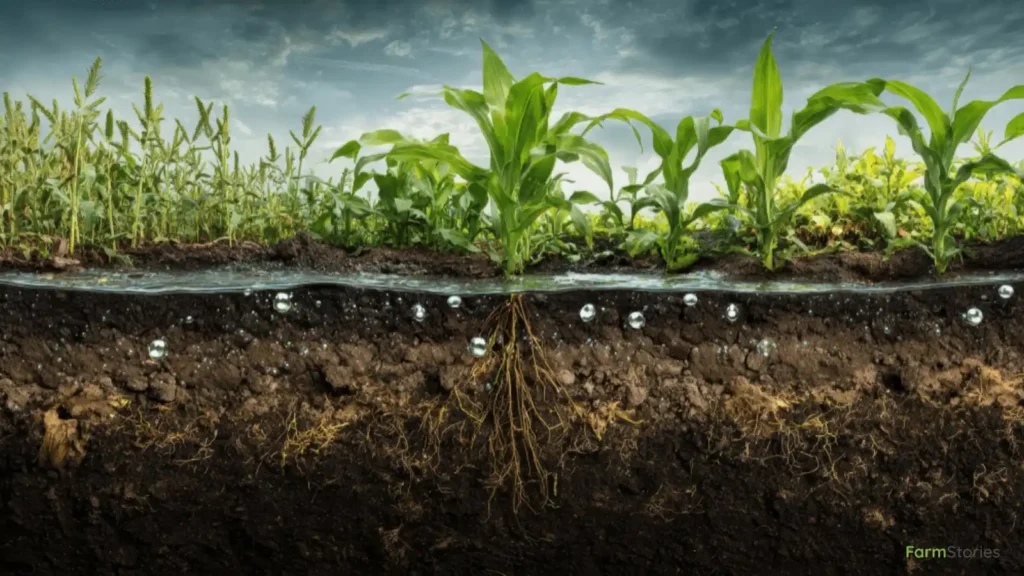
A regenerative farm treats soil as a living ecosystem rather than just a medium for holding plant roots. Healthy soil contains billions of microorganisms, fungi, earthworms, insects, and organic matter that recycle nutrients, improve soil structure, and support healthy crop growth.
When these biological systems are protected and encouraged, farms become more productive and resilient over the long term.
Is Regenerative Farming a New Concept?
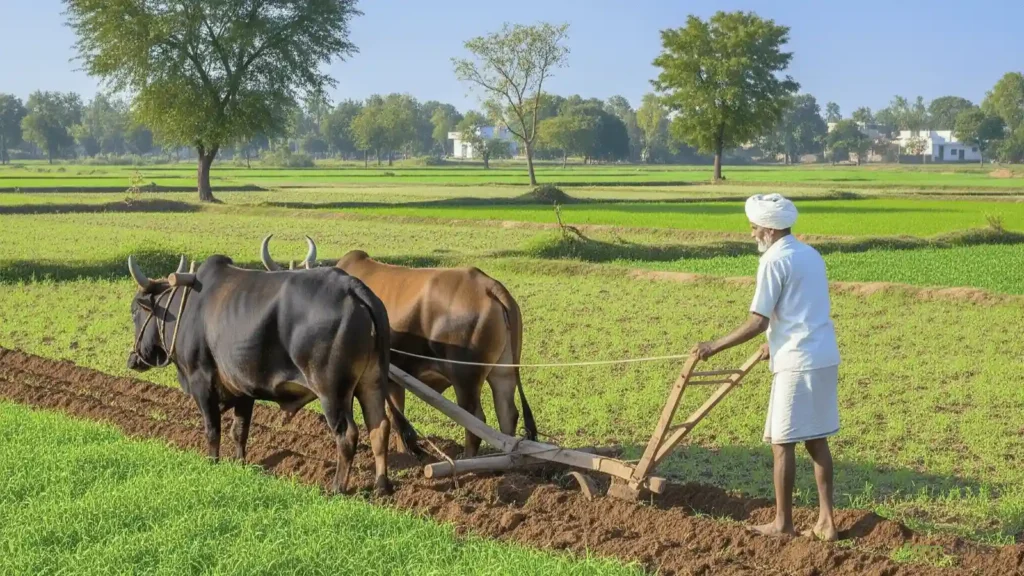
Although the term regenerative farming has become popular in recent years, many of its principles have existed in Indian agriculture for generations.
Traditional farming systems often included mixed cropping, crop rotation, composting, livestock integration, agroforestry, and the recycling of crop residues. These practices naturally improved soil fertility while reducing dependence on purchased inputs.
Modern regenerative farming combines this traditional knowledge with current scientific understanding of soil biology, ecology, and climate adaptation.
Research by organizations such as the Indian Council of Agricultural Research and the Food and Agriculture Organization continues to emphasize the importance of healthy soils, biodiversity, and efficient resource management for sustainable agricultural production.
The Main Goals of Regenerative Farming
Every regenerative farm is different, but most successful systems share the same long-term objectives.
Restore Soil Health
Healthy soil is the foundation of productive agriculture.
Adding compost, maintaining soil cover, reducing unnecessary tillage, and growing cover crops gradually increase soil organic matter. Improved soil structure allows roots to grow deeper while helping the soil absorb and retain more moisture.
Water has become one of the most valuable resources in Indian agriculture.
Regenerative practices such as mulching, compost application, rainwater harvesting, and agroforestry improve the soil’s ability to capture and store rainfall. This helps crops withstand short dry spells and reduces dependence on frequent irrigation.
Increase Biodiversity
A regenerative farm supports many forms of life.
Instead of growing a single crop across the entire field, farmers introduce crop rotations, intercropping, flowering plants, trees, livestock, and beneficial insects. Greater biodiversity often improves pollination, strengthens natural pest control, and creates a more balanced farming ecosystem.
Reduce Dependence on External Inputs
One of the biggest goals of Regenerative Farming in India is to reduce unnecessary spending on purchased inputs.
As soil health improves, farmers can make greater use of compost, farmyard manure, green manures, crop residues, and biological pest management. While this transition takes time, it can lower production costs and reduce financial risk.
Build Climate Resilience
Weather conditions are becoming increasingly unpredictable.
A regenerative farming system helps farms recover more effectively from droughts, heavy rainfall, and heatwaves by improving soil structure, increasing crop diversity, and strengthening natural ecological processes.
Why Regenerative Farming in India Is Becoming Essential
Indian agriculture has achieved remarkable increases in food production over the past several decades. However, today’s farmers face a new set of challenges that require different solutions.
Declining soil fertility, rising cultivation costs, groundwater depletion, and climate variability are affecting farms across the country. These problems are particularly serious for smallholders who depend on limited land and have fewer financial resources to absorb losses.
Declining Soil Health
Healthy soil stores nutrients, retains moisture, and supports millions of beneficial organisms.
Years of intensive cultivation, excessive tillage, residue burning, and repeated chemical applications have reduced soil organic matter in many agricultural regions. As soil becomes compacted and biologically less active, crops often require higher fertilizer inputs to maintain productivity.
Improving soil health is not only an environmental priority but also an economic one.
Rising Production Costs
The cost of fertilizers, pesticides, diesel, irrigation, labour, and machinery has increased steadily over the years.
Many farmers find that cultivation expenses continue to rise even when crop prices remain uncertain.
Regenerative Farming in India encourages greater use of locally available resources, helping farmers gradually reduce dependence on expensive external inputs while improving long-term soil productivity.
Water Scarcity
Groundwater levels are declining in many parts of India, while rainfall patterns are becoming more irregular.
Healthy soils rich in organic matter absorb rainfall more effectively and retain moisture for longer periods. Practices such as mulching, cover cropping, composting, and rainwater harvesting improve water use efficiency without relying solely on additional irrigation.
Climate Change Is Increasing Farming Risks
Indian farmers now face more frequent heatwaves, delayed monsoons, unseasonal rainfall, floods, and prolonged dry spells than in previous decades.
Instead of preparing only for average weather conditions, farmers increasingly need production systems that can perform under uncertainty.
This is one of the reasons Regenerative Farming in India has gained attention. By improving soil health, increasing biodiversity, integrating trees, and reducing dependence on a single crop, regenerative farms become more resilient to weather extremes.
In the next section, we’ll examine how El Niño influences Indian agriculture and why regenerative farming can help small farmers adapt to changing climate conditions without depending entirely on costly external inputs.
How El Niño Affects Indian Agriculture and Why Regenerative Farming Matters
Climate has always shaped Indian agriculture, but weather patterns are becoming more unpredictable. Farmers now deal with delayed monsoons, sudden heavy rainfall, longer dry spells, and more frequent heatwaves. One of the major climate patterns that influences these changes is El Niño.
For small and marginal farmers, a weak monsoon can mean reduced yields, higher irrigation costs, and lower income. This is where Regenerative Farming in India becomes especially valuable. While no farming system can prevent drought or change the weather, regenerative practices help farms withstand climate stress more effectively.
El Niño is a natural climate phenomenon that occurs when the surface waters of the central and eastern Pacific Ocean become warmer than normal. These temperature changes influence global weather systems, including the Indian southwest monsoon.
Not every El Niño year affects India in the same way, but many events have been associated with below-average monsoon rainfall, delayed monsoon onset, or uneven rainfall distribution across different regions.
For farmers, the timing of rainfall is often as important as the total amount of rainfall. A delayed sowing season or a long dry spell during crop growth can reduce yields even if seasonal rainfall eventually reaches near-normal levels.
Why Small Farmers Are More Vulnerable
Farmers cultivating less than one acre usually have fewer financial reserves to absorb crop losses.
Many depend on rainfall rather than irrigation. Purchasing additional water, fertilizers, or pesticides during a difficult season increases production costs and financial pressure.
Small farms also have limited opportunities to spread risk when only one or two crops are grown.
Diversifying the farm becomes an important strategy for reducing this risk.
How Regenerative Farming in India Helps During El Niño
Healthy soil functions differently from degraded soil.
When organic matter increases, the soil develops a better structure. Water infiltrates more easily, runoff decreases, and more moisture remains available to plant roots after rainfall.
For example, a field covered with crop residues or mulch loses less moisture through evaporation than bare soil exposed directly to the sun.
Similarly, fields containing healthy microbial populations and earthworm activity often have better water infiltration than compacted soils.
During short dry spells, these improvements can help crops continue growing when neighboring fields begin to experience moisture stress.
Although regenerative farming cannot eliminate drought risk, it can improve the farm’s ability to recover after difficult weather.
Climate Resilience Starts Below the Surface
Many farmers judge soil by its colour or texture.
However, one of the biggest differences between conventional and regenerative farming lies underground.
Healthy soil contains:
beneficial bacteria,
fungi,
earthworms,
insects,
organic matter,
living plant roots.
Together, these organisms recycle nutrients, improve soil structure, and create natural air and water channels.
Over time, healthier soils become easier to cultivate and better able to support crops during challenging seasons.
This is one of the biggest long-term advantages of Regenerative Farming in India.
The Seven Principles of Regenerative Farming in India
Although farming systems differ across India’s diverse agro-climatic zones, successful regenerative farms usually follow the same core principles.
1. Disturb the Soil as Little as Possible
Every time soil is deeply ploughed, its natural structure is disrupted.
Excessive tillage exposes organic matter to rapid decomposition, damages fungal networks, and reduces biological activity.
This does not mean farmers must completely eliminate tillage immediately.
Instead, reduce unnecessary soil disturbance wherever practical and adopt minimum tillage methods when suitable for local conditions.
2. Keep the Soil Covered Throughout the Year
Bare soil loses moisture quickly.
It is also vulnerable to erosion from heavy rainfall and strong sunlight.
Covering the soil with crop residues, straw, dry leaves, compost, or living cover crops helps:
reduce evaporation,
suppress weeds,
improve moisture retention,
protect beneficial microorganisms,
reduce soil erosion.
In many parts of India, farmers can use locally available crop residues instead of burning them after harvest.
3. Grow a Diversity of Crops
Nature rarely grows only one plant species across an entire landscape.
Crop diversity supports healthier ecosystems and reduces farming risks.
Instead of depending entirely on one crop, farmers can combine cereals, pulses, vegetables, spices, fodder crops, and fruit trees according to local conditions.
Intercropping maize with pigeon pea or growing vegetables between young fruit trees are practical examples of diversification.
Crop diversity also creates multiple income opportunities throughout the year.
4. Feed the Soil, Not Just the Crop
Plants absorb nutrients from the soil, but healthy soils continuously recycle nutrients through biological activity.
Compost, farmyard manure, green manures, crop residues, and biofertilizers help feed soil organisms that, in turn, make nutrients available to crops.
This approach improves long-term soil fertility rather than supplying nutrients only for the current season.
Trees play an important role in regenerative agriculture.
Boundary plantations and agroforestry systems provide:
shade,
wind protection,
leaf litter,
biomass for compost,
fodder,
fruits,
additional income.
Species such as moringa, neem, pongamia, gliricidia, and subabul are commonly integrated into Indian farming systems depending on regional suitability.
6. Integrate Livestock
Livestock contribute much more than milk or meat production.
Cattle, goats, poultry, ducks, and other farm animals help recycle nutrients through manure while supporting diversified farm income.
On many small farms, livestock strengthen the connection between crop production and soil fertility.
Their manure becomes compost, crop residues become fodder, and nutrients return to the field.
7. Protect Biodiversity
A healthy farm supports more than crops.
Birds, pollinating insects, earthworms, beneficial fungi, and natural predators all contribute to a productive farming ecosystem.
Simple practices such as maintaining flowering plants, reducing unnecessary pesticide use, protecting trees, and preserving field boundaries encourage biodiversity while reducing pest pressure naturally.
Regenerative Farming vs Organic Farming vs Natural Farming
These farming approaches are often confused because they share several common practices.
However, their primary objectives differ.
Feature
Regenerative Farming
Organic Farming
Natural Farming
Primary Goal
Restore soil health and ecosystem functions
Avoid synthetic chemicals
Minimize external inputs using biological processes
Soil Health
Central focus
Important
Important
Biodiversity
Strong emphasis
Moderate emphasis
Strong emphasis
Crop Diversity
Highly encouraged
Encouraged
Highly encouraged
Livestock Integration
Recommended
Optional
Often encouraged
Certification
Usually not required
Often required for premium markets
Generally not required
Main Success Measure
Healthier soil, resilient farms, sustainable income
Certified organic production
Low-cost biological farming
Rather than viewing these systems as competitors, many farmers combine practices from all three approaches based on local conditions, available resources, and market opportunities.
For example, a farmer may use compost, crop rotation, mulching, agroforestry, and biological pest management while also producing crops for organic markets.
The next section explores how Regenerative Farming in India can be successfully adopted on farms smaller than one acre and how diversified farming systems can improve income while reducing financial risk.
Can Regenerative Farming in India Work on Less Than One Acre?
One of the biggest misconceptions about Regenerative Farming in India is that it only works on large farms. In reality, many regenerative practices are easier to manage on small landholdings because farmers can observe their fields closely and respond quickly to changing conditions.
For farmers with less than one acre, the goal should not be to maximize the production of a single crop. Instead, the objective is to make every part of the farm productive while reducing financial risk.
A diversified farm can generate income from vegetables, fruits, pulses, spices, livestock, compost, honey, and value-added products instead of depending on one seasonal harvest.
Why Small Farmers Can Benefit the Most
Small farmers often face challenges such as limited capital, rising input costs, and uncertain weather. At the same time, they have one important advantage: they can manage their land intensively.
Instead of maintaining large monoculture fields, small farmers can develop integrated farming systems where every component supports another.
For example:
Crop residues become compost.
Compost improves soil fertility.
Healthy soil retains more moisture.
Better soil supports healthier crops.
Livestock provide manure.
Trees provide mulch, fodder, fruits, and shade.
Bees improve pollination while producing honey.
This creates a farming system that becomes more productive over time rather than relying heavily on purchased inputs.
Can Regenerative Farming Replace Conventional Farming Completely?
The answer depends on the individual farm.
Some farmers adopt regenerative practices gradually while continuing to use selected conventional inputs during the transition.
Others shift more quickly after gaining confidence in soil-building practices.
There is no single model that suits every region or crop.
The most successful approach is often a phased transition based on local conditions, market demand, water availability, and farmer experience.
The important point is that Regenerative Farming in India is not about abandoning science or modern agriculture. It combines traditional farming knowledge with current understanding of soil biology, ecology, and climate resilience to create productive farming systems that can perform well over the long term.
In the next section, we’ll look at how farmers can begin the transition step by step, explore government schemes that support regenerative practices, examine real examples from India, and answer the most common questions about regenerative farming.
How to Start Regenerative Farming in India
The transition to Regenerative Farming in India does not need to happen overnight. In fact, making gradual changes is often the safest approach, especially for small farmers who depend on every harvest for their income.
Instead of changing everything at once, improve one part of your farming system each season. As your soil becomes healthier and your confidence grows, you can expand regenerative practices across the rest of your land.
A Step-by-Step Roadmap
Year 1: Restore the Soil
The first year should focus on rebuilding soil health and reducing waste.
Start by:
Testing your soil to understand its pH, organic carbon, and nutrient levels.
Stopping crop residue burning and using residues as mulch or compost.
Building a compost or vermicompost unit using locally available materials.
Applying mulch to protect the soil from heat and heavy rainfall.
Introducing crop rotation instead of growing the same crop repeatedly.
Planting one green manure crop such as sunn hemp or dhaincha before the next main crop.
The goal during the first year is not maximum yield. It is to begin restoring the biological activity of your soil.
Year 2: Diversify the Farm
Once the soil starts improving, gradually diversify your farming system.
This may include:
Reducing chemical fertilizer use based on soil test results.
Planting boundary trees such as moringa, neem, gliricidia, or pongamia.
Introducing vegetables, pulses, spices, or fodder crops.
Starting backyard poultry, goat rearing, or beekeeping if suitable.
Installing drip irrigation or rainwater harvesting where feasible.
Diversification spreads financial risk while creating additional income opportunities throughout the year.
Year 3: Strengthen the System
By the third year, many regenerative practices become part of everyday farm management.
Focus on:
Producing high-quality compost consistently.
Increasing crop diversity.
Monitoring improvements in soil health.
Marketing produce directly to consumers where practical.
Exploring value-added products such as honey, turmeric powder, pickles, or vermicompost.
The objective is to create a farming system that becomes more productive and resilient over time.
Common Mistakes to Avoid
Farmers sometimes become disappointed because they expect immediate results or adopt too many changes at once.
Avoid these common mistakes.
Expecting Instant Results
Healthy soil develops gradually.
You may notice better moisture retention during the first season, but significant improvements in soil organic matter and biological activity usually take several years.
Stopping All Chemical Inputs Immediately
A sudden transition can reduce yields on farms where soil health has already declined.
A gradual approach often reduces financial risk while allowing soil biology to recover.
Ignoring Market Demand
Growing high-value crops is only beneficial if buyers are available.
Before introducing a new crop, understand local demand, transport costs, storage requirements, and potential markets.
Growing Too Many Crops
Diversification is valuable, but managing too many enterprises at once can become difficult.
Begin with a manageable number of crops and expand gradually.
Neglecting Water Management
Healthy soil stores more water, but efficient irrigation remains important.
Rainwater harvesting, mulching, and drip irrigation complement each other and improve water use efficiency.
Government Support for Regenerative Farming in India
Although India does not currently have a single programme dedicated exclusively to Regenerative Farming in India, several government initiatives support practices that are central to regenerative agriculture.
National Mission on Natural Farming
This programme promotes biological farming methods, farmer training, and reduced dependence on synthetic inputs.
Farmers interested in regenerative practices can benefit from the knowledge and training offered through this mission.
Water conservation is a key part of regenerative farming.
PMKSY encourages efficient irrigation through drip and sprinkler systems while supporting better water management.
Sub-Mission on Agroforestry
Farmers receive support for integrating suitable tree species into agricultural landscapes.
Agroforestry improves biodiversity, protects soil, and creates additional long-term income opportunities.
Farmers should also check state government programmes because several states provide additional support for natural farming, organic farming, water conservation, and sustainable agriculture.
Indian Examples of Regenerative Practices
Many Indian farmers already follow practices that closely match regenerative agriculture, even if they use different terminology.
In Punjab and Haryana, increasing numbers of farmers are managing crop residues instead of burning them, helping conserve soil organic matter and reduce air pollution.
Farmers in Maharashtra and Karnataka have successfully integrated fruit trees, pulses, vegetables, and livestock to diversify income while improving soil health.
Kerala’s traditional mixed farming systems, where coconut, banana, spices, vegetables, fodder crops, and livestock are grown together, also demonstrate many regenerative farming principles.
These examples show that Regenerative Farming in India builds on many practices already familiar to farming communities.
Frequently Asked Questions
Is Regenerative Farming in India suitable for farmers with less than one acre?
Yes. Small farms are often well suited to regenerative farming because they are easier to manage intensively. Diversified cropping, composting, livestock integration, and direct marketing can all be adopted on limited land.
Does regenerative farming increase crop yields immediately?
Not always.
Some farms experience stable yields, while others may see temporary reductions during the transition period. Long-term benefits usually come from healthier soils, lower production costs, and improved resilience.
How long does it take to see results?
Reduced evaporation and improved soil moisture may become noticeable within the first season after mulching.
Significant improvements in soil structure and organic matter generally require consistent management over several years.
Is regenerative farming expensive?
No.
Many regenerative practices rely on locally available materials such as crop residues, compost, farmyard manure, green manures, and biological pest management.
The main investment is time, planning, and consistent management.
Can regenerative farming help during El Niño years?
It cannot prevent drought or change weather conditions.
However, healthier soils with higher organic matter retain moisture more effectively, helping crops cope better with short dry spells and irregular rainfall.
Regenerative Farming in India is not simply another farming technique. It is a long-term approach to rebuilding healthy soils, improving biodiversity, conserving water, and creating more resilient farming systems.
For small and marginal farmers, the greatest benefit is not the promise of instant profits. The real advantage lies in reducing dependence on expensive external inputs, improving soil fertility, increasing water retention, and creating multiple income opportunities from the same piece of land.
Climate challenges such as El Niño, rising temperatures, and unpredictable rainfall are likely to remain part of Indian agriculture for years to come. Farms with healthy soils, diverse crops, efficient water management, and integrated farming systems are generally better prepared to face these uncertainties.
The journey toward regenerative farming begins with small, practical steps. Composting instead of burning crop residues, planting cover crops, introducing crop rotation, harvesting rainwater, adding trees, and protecting soil with mulch can gradually improve both the land and the farm business.
As India moves towards more climate-resilient agriculture, Regenerative Farming in India offers an opportunity to combine traditional farming knowledge with modern scientific understanding. The result is a farming system that supports productive land, healthier ecosystems, and stronger rural livelihoods for future generations.
Want to see these techniques in action? Join our growing community of urban farmers by following FarmStories on LinkedIn, Instagram, YouTube, and Facebook for daily tips, video guides, and harvest inspiration!