If you take a close look at global agricultural data today, one stark reality becomes incredibly clear: food demand is accelerating at a pace we have never seen before. With the global population rapidly marching toward the 10 billion milestone, traditional open-field farming is being pushed to its absolute limits.
We are facing a perfect storm of environmental challenges. Fertile topsoil is eroding at an unprecedented rate, arable land is being swallowed up by urban expansion, and increasingly erratic weather patterns are turning outdoor crop cycles into an unpredictable gamble. Farmers today are wrestling with systemic crises that simply didn’t exist a generation ago.
This leaves us with a massive, unavoidable question: how are we going to sustainably feed the future?
Interestingly, the most revolutionary answers are no longer found out in the open fields. Agriculture is moving indoors. Welcome to the rapidly expanding world of hydroponics and vertical farming—a frontier where crops thrive entirely without soil, and sometimes, without ever feeling a single ray of natural sunlight.
What is Hydroponics and Vertical Farming Detailed Comparison
🌱 What is Hydroponics? (The Science of Soil less Growth)
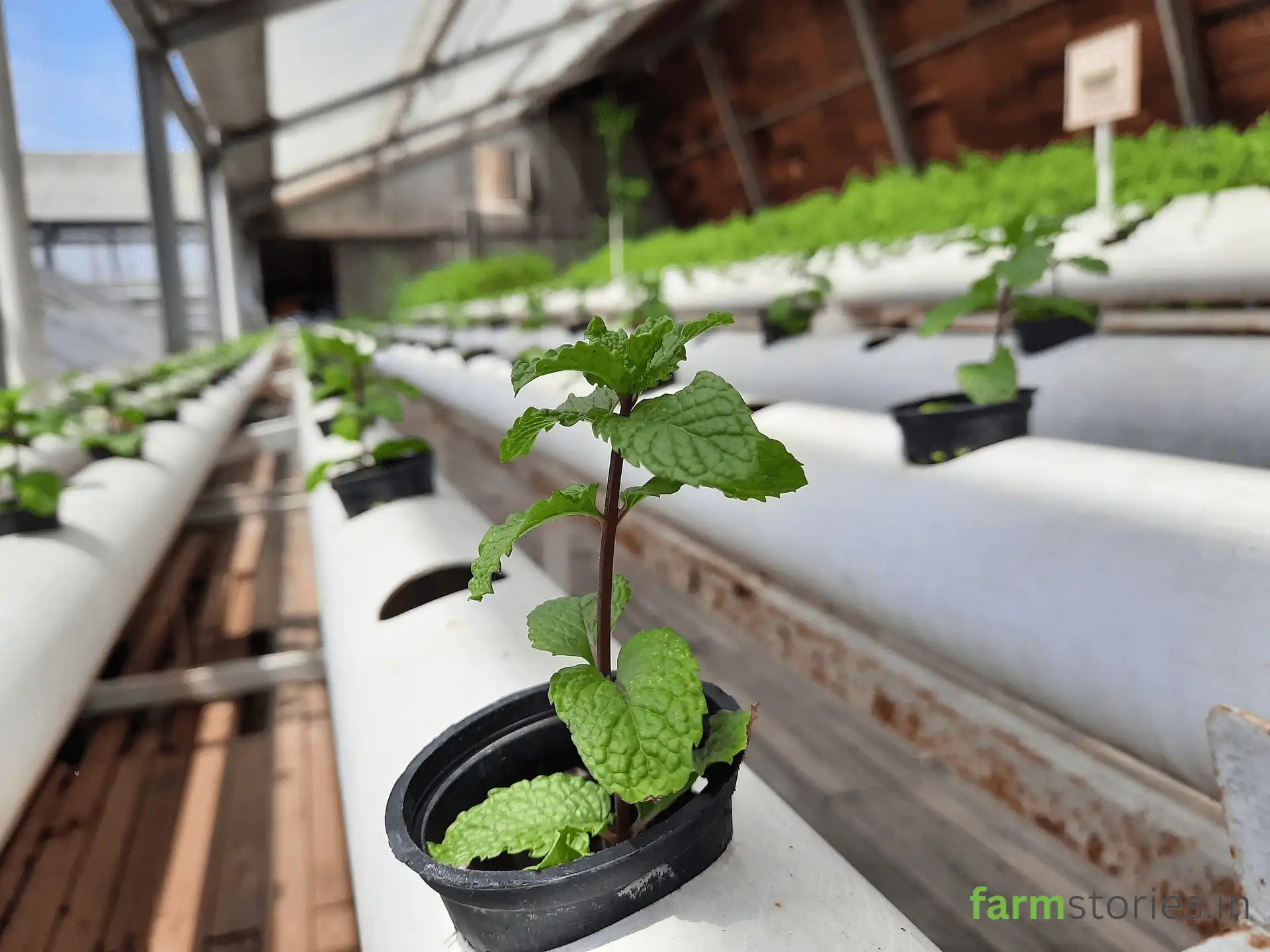
Hydroponics might sound like a complicated technical buzzword, but the underlying philosophy is beautifully straightforward. Instead of forcing a plant to grow in traditional dirt, a hydroponic system delivers highly oxygenated, nutrient-rich water directly to the plant’s roots.
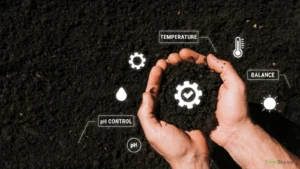
To understand why this is such a game-changer, it helps to rethink what soil actually does. In a standard outdoor farm, soil acts as a massive, chaotic storage unit. It holds moisture and trace minerals, but those nutrients are scattered. As a result, a plant has to expend an immense amount of energy growing a vast, sprawling root system just to hunt through the dirt for food.
[Traditional Soil Farming]
   └── Roots must grow long and spread out to hunt for scattered nutrients.
   └── Heavy energy expenditure underground = Slower top-side growth.

[Hydroponic Soil-less System]
   └── Balanced nutrient solution delivered directly to the root zone.
   └── Zero energy wasted hunting for food = 40-50% faster crop yields.
Hydroponics completely bypasses this struggle. By suspending the plant in inert, neutral materials like cocopeat, clay pebbles, or perlite, the roots don’t have to work to stay anchored. These mediums don’t provide any nutrition on their own—they simply hold the plant steady.
Because the perfect balance of food is delivered straight to their doorstep in liquid form, the plants completely stop wasting energy building massive underground networks. Instead, they redirect 100% of their energy upward into leaf development, flowering, and heavy fruit production. Because every single variable is controlled, crops in a hydroponic system routinely grow 40% to 50% faster than those grown in conventional soil.
Join a community dedicated to sustainable cultivation. Subscribe to FarmStories below for free, authentic insights into modern agri-tech and organic farming methods.
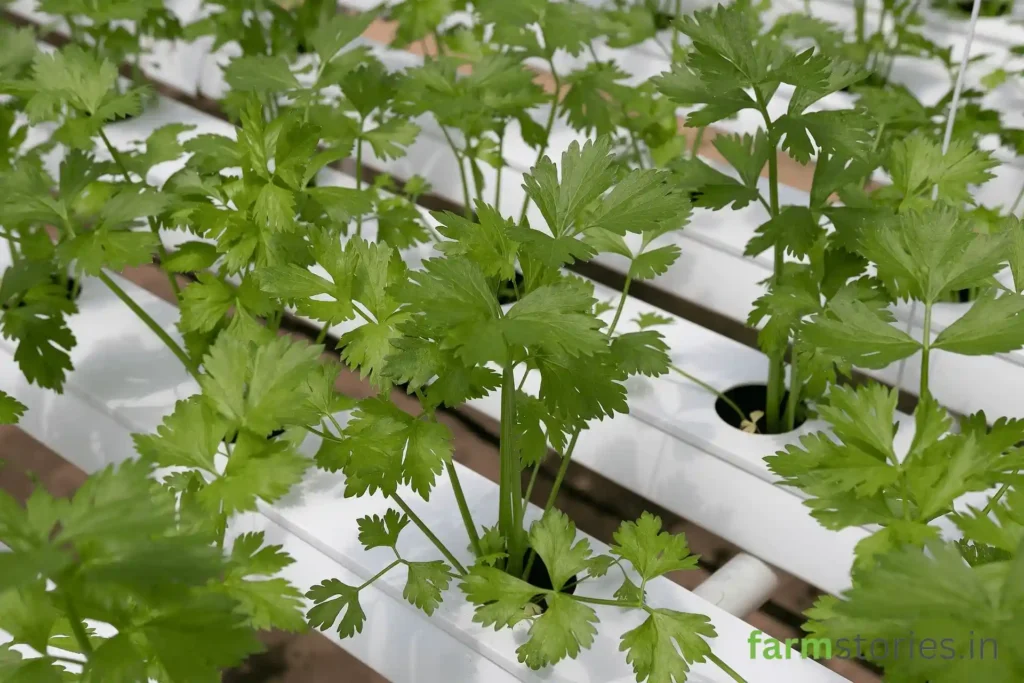
Hydroponics and Vertical Farming – Coriander leaves in the Hydroponics mode of farming.
🏙️ What is Vertical Farming?
While hydroponics solves the biological limitations of soil, Vertical Farming tackles the physical limitations of geographical space.
Instead of spreading crops horizontally across acres of expensive, flat farmland, vertical farming flips the blueprint on its head. It stacks growing layers vertically, one on top of the other, moving agriculture upward into the third dimension. This allows commercial growers to transform non-traditional indoor spaces—like abandoned urban warehouses, recycled shipping containers, or specially engineered city buildings—into highly productive agricultural powerhouses.
Because these farms operate inside sealed, windowless environments, they don’t rely on the sun. Instead, they utilize advanced, full-spectrum LED grow lights. These aren’t your typical home bulbs; they are highly engineered light panels tuned to emit the exact color wavelengths (the PAR spectrum) that plants need to photosynthesize at maximum efficiency. By taking farming indoors, we are no longer growing sideways across the landscape—we are growing upwards into the future.
🚀 Why Hydroponics and Vertical Farming Are the Future
This shift toward indoor, automated agriculture isn’t just a passing design trend or a high-tech gimmick. It is a vital ecological and economic necessity, backed by powerful global benefits.
💧 1. Slashing Water Waste by 90%
Traditional open-field irrigation is notoriously wasteful. When you water a conventional crop, a massive percentage of that water immediately evaporates into the hot air or seeps deep into the ground, completely missing the plant’s root zone. Hydroponic systems, by contrast, are entirely closed-loop. The water circles through the growing trays continuously, and the only water that ever leaves the system is the exact amount the plant actually drinks. This allows indoor farms to use up to 90% less water than traditional farms, making it a critical technology for regions facing severe water scarcity.
🌿 2. Eliminating Toxic Pesticides
When you move a farm indoors and seal the perimeter, you completely lock out the natural world’s pest pressures. Inside a vertical farm, there are no sudden swarms of locusts, no invasive weeds, and no aphids waiting to destroy a crop overnight. Because the environment is entirely controlled, growers can produce pristine, flawless vegetables without ever needing to spray chemical pesticides or toxic herbicides. The result is clean, safe food in its purest form.
🚚 3. Radically Reducing “Food Miles”
Think about the logistics behind your dinner plate. Currently, the average vegetable travels hundreds, sometimes thousands, of kilometers in refrigerated trucks and cargo planes before it reaches a grocery store shelf. This supply chain burns massive amounts of fossil fuel and requires produce to be harvested while it is still green and flavorless so it doesn’t rot during transit. Vertical farms can be set up directly inside major metropolitan cities. By growing food blocks away from where it is consumed, transportation costs plummet, emissions drop, and consumers get access to produce harvested at peak ripeness that very morning.
🌦️ 4. True 365-Day Farming
Outdoor agriculture is entirely at the mercy of seasonal shifts and climate chaos. A sudden frost, an extended summer drought, or an unexpected monsoon can obliterate an entire year’s crop in a matter of hours. Indoor vertical farms effectively control their own weather. The internal temperature, humidity, and airflow are monitored and adjusted around the clock. This creates a perpetual, ideal growing season, allowing for reliable, identical yields 365 days a year.
🏡 Can You Try Hydroponics at Home?
The most exciting aspect of this agricultural shift is that it isn’t reserved solely for multi-million dollar corporations. The exact same science scales down beautifully for the home gardener.
You don’t need an expensive, high-tech laboratory to get started. Simple, accessible methods like the Kratky method (a completely passive system that uses no electricity) or Deep Water Culture (DWC) can be set up using basic household items. With a few plastic storage containers, a standard nutrient solution, and a small aquarium air pump, anyone can build a functioning hydroponic setup.
These mini-systems are incredibly efficient for growing fresh salad greens like lettuce, spinach, culinary herbs like basil, and even small fruiting plants like cherry tomatoes. With just a small balcony or a spare corner in your kitchen, you can easily establish your own miniature vertical farm.
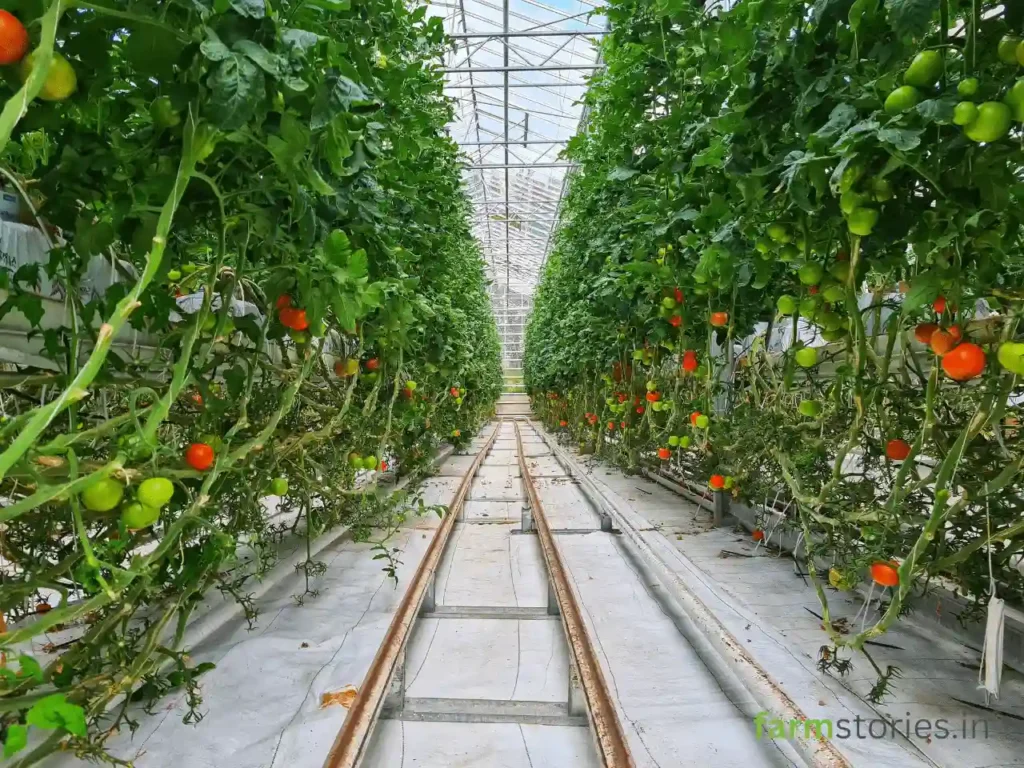
Hydroponics and Vertical Farming The future – a Tomato Farm
⚠️ Is Hydroponics Perfect?
To look at this industry realistically, we have to acknowledge that hydroponics is not a magical silver bullet; it comes with its own distinct set of hurdles.
The primary barrier for most people is the initial setup cost. Purchasing high-quality LED grow lights, water pumps, reservoirs, and automated timers requires an upfront investment that is significantly higher than buying a bag of dirt and a plastic pot. Furthermore, there is a learning curve involved. Because you are replacing nature, you become responsible for monitoring water pH levels and nutrient concentrations yourself.
Finally, indoor farms are heavily dependent on power. If your system relies on electric pumps and artificial lights to keep plants alive, a prolonged power outage can quickly jeopardize an entire harvest if backup systems aren’t in place. However, once you grasp the basic operational principles, managing these systems becomes incredibly intuitive.
❓ FAQs – Hydroponics and Vertical Farming
1. Is hydroponics better than soil farming? It depends entirely on your goals. Hydroponics offers significantly faster growth rates, higher yields, and uses a fraction of the water, making it highly efficient for space-constrained environments. However, traditional soil farming remains much cheaper to start, requires less technical knowledge, and is better suited for root vegetables like carrots and potatoes.
2. Can true beginners try hydroponics at home without experience? Absolutely. Beginners should avoid complex setups and start with the completely passive Kratky method. It requires zero moving parts, no electricity, and allows you to learn how plants respond to liquid nutrients with minimal financial risk.
3. What specific crops grow best in a hydroponic setup? Leafy green vegetables (like lettuce, kale, and spinach), culinary herbs (such as basil, mint, and coriander), and compact fruiting plants (like strawberries and cherry tomatoes) perform exceptionally well in hydroponic environments.
4. Is vertical farming commercially viable in India? Yes, it is rapidly gaining traction. As urban land prices in major hubs like Mumbai, Bangalore, and Delhi continue to climb, vertical farming offers an incredibly viable path to grow high-value, pesticide-free produce right next to dense consumer markets.
Hydroponics and Vertical Farming – Final Thoughts
Hydroponics and vertical farming are not here to completely replace traditional outdoor agriculture. Instead, they are evolving into a critical pillar of our global food security strategy. As our cities grow denser and natural resources become more scarce, these soil less methods offer a practical, scalable, and highly efficient path forward.
The best part? You don’t have to sit back and watch this technological shift happen from the sidelines. You can start exploring the future of farming today, right from the comfort of your own home.
Want to see these techniques in action? Join our growing community of urban farmers by following farmstories on LinkedIn, Instagram, YouTube, and Facebook for daily tips, video guides, and harvest inspiration!