Most kharif crop problems don’t announce themselves with a flood or a pest invasion. They start quietly — below the surface, weeks before you see anything wrong — and by the time the damage shows up in your yield, the season is already half gone.
Every farmer knows to watch the monsoon forecast. Every farmer budgets for seeds and fertilizer. But two kharif crop problems keep showing up season after season that most farmers either ignore or misdiagnose entirely. The first is poor soil health. The second is counterfeit farm inputs. And in 2026, with the government notifying the new Insecticides (Amendment) Rules this very month, both issues have become impossible to ignore.
This article breaks down both kharif crop problems clearly — what causes them, how to spot them early, and what you can do before they take your harvest.
Table of Contents
The Soil Problem Behind Most Kharif Crop Problems
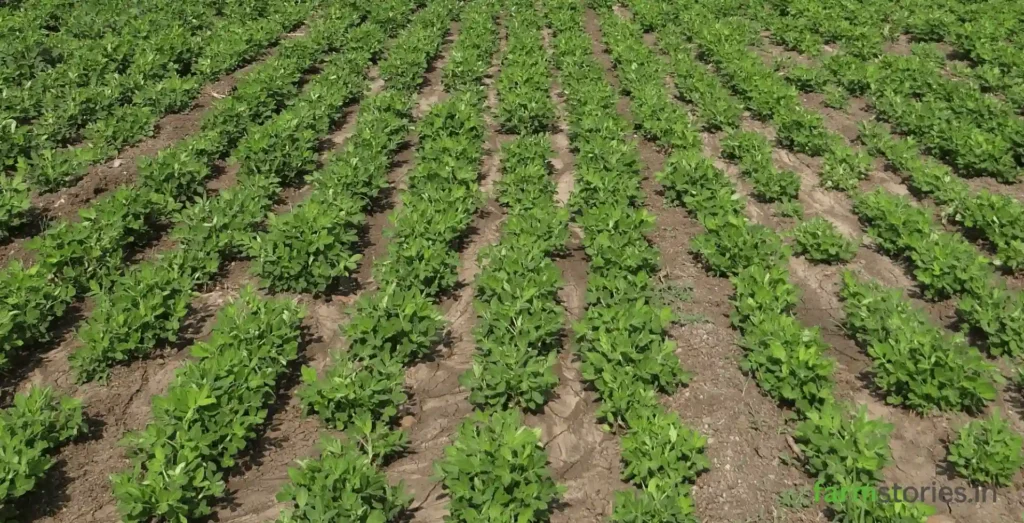
Here’s how this particular kharif crop problem typically unfolds. Your seeds germinate on schedule. The plants come up green. Everything looks normal through the first month. Then somewhere around day 30 to 40, growth slows. Leaves go pale. Some patches of the field stay stunted while the rest moves ahead. You add more urea. Nothing changes.
The problem isn’t the fertilizer. It’s the soil’s ability to use it.
I’ve seen this play out in paddy fields across Palakkad, where farmers reported uneven growth across plots using identical seeds, the same water schedule, and the same fertilizer quantities. The yield difference between the strongest and weakest patches came to 20–25% — not because of weather or inputs, but because of soil condition. Compacted layers from repeated deep ploughing, low organic matter, and a near-complete absence of beneficial microbes had made the soil chemically inert. The nutrients were there. The crops just couldn’t absorb them.
Why Soil Degrades Faster Than Farmers Expect
Continuous chemical fertilizer use without organic matter replenishment strips the microbial life from your soil over 3 to 5 seasons. Each round of heavy ploughing compacts the subsoil layer further, blocking root penetration and reducing water retention. By the time a farmer notices the problem — usually through uneven growth or fields that dry out within 48 hours of rain — the degradation has already been building for 2 to 3 years.
This is exactly why kharif crop problems linked to soil health are so dangerous. They’re invisible in the early stages, and they compound quietly across seasons until the yield gap becomes too large to ignore.
Join a community dedicated to sustainable cultivation. Subscribe to FarmStories below for free, authentic insights into modern agri-tech and organic farming methods.
Early Warning Signs You Shouldn’t Ignore
You might wonder whether your soil is already heading in this direction. Watch for four specific signals. Uneven crop growth across the field — same inputs, different results — is the clearest sign. Fields that lose surface moisture unusually fast after rain point to poor water retention. A hard crust that forms within 2 to 3 days after irrigation suggests compaction. And if pest attacks are increasing season on season without a clear reason, weakened plants from poor soil nutrition are almost always the underlying cause. These four signals together are a reliable early-warning system for kharif crop problems rooted in soil degradation.
What Actually Fixes It
You don’t need an expensive soil remediation programme. Start by incorporating 2 to 3 tonnes of well-composted Farmyard Manure per acre before sowing. That alone rebuilds organic matter faster than most farmers expect. After the first rain, practice dust mulching — run a light hoe between rows to break the surface crust and trap subsoil moisture. If you’ve been ploughing deep every season, skip it for one cycle. Minimal tillage helps the soil structure recover. And for microbial restoration, simple on-farm inputs like jeevamrutham — fermented cattle dung, urine, jaggery, and pulse flour — reintroduce beneficial biology into the root zone within one season. None of this requires a large budget. It requires a decision to start before the kharif crop problems deepen further.
Fake Inputs: The Second Category of Kharif Crop Problems
The second class of kharif crop problems is more recent and in some ways more dangerous — because it looks exactly like a legitimate purchase until it’s too late.
Counterfeit farm inputs — fake pesticides, diluted fertilizers, and non-viable seeds — have spread steadily through rural retail markets. Unscrupulous distributors repackage expired agrochemicals or generic crop seeds as premium branded products, and the visual difference is often impossible to detect without testing. The financial damage is immediate and total. A single season with fake inputs can mean a complete crop failure plus the cost of the inputs themselves.
A vegetable grower near Rhenock lost his entire green chilli crop — weeks of labour and the full planting cost — because a cheap, unbranded insecticide from an unauthorised agent turned out to be diluted industrial waste. His plants were scorched within 48 hours of the first spray. It’s an extreme case, but it’s not rare. Across India, kharif crop problems from counterfeit inputs are being reported in districts that never flagged this issue five years ago.
Why 2026 Changes the Game
The Ministry of Agriculture’s nationwide Khet Bachao Abhiyan — the Save the Field Campaign — is running active enforcement operations this kharif season. And in June 2026, the government notified the Insecticides (Amendment) Rules, 2026, forcing the entire agrochemical industry into a mandatory real-time digital tracking framework. Every batch of technical-grade crop protection chemicals must now be electronically traceable from the factory to your village distributor.
This matters because it creates a paper trail that didn’t exist before. But the system only protects you if you actively use it. Reputable companies are integrating QR codes directly into their packaging, linking to batch records and soil advisory databases. If a dealer hands you a packet of cotton or chilli seeds without a verifiable scan code, treat it as a red flag.
How to Spot Fake Pesticides and Seeds at the Counter
This is where kharif crop problems from bad inputs become entirely preventable — if you know what to check at the point of purchase.
Start with the packaging itself. Legitimate agrochemical products have secure seals, sharp label printing, and mandatory details including the Central Insecticides Registration number, batch manufacturing date, and expiry. If the print looks blurred, the label peels when wet, or the cap seal is loose, put it back on the shelf. Counterfeits almost always fail at least one of these checks.
Never buy without a formal invoice. A digital tax receipt listing the batch number, product details, and dealer information is your legal protection if the crop fails. Any dealer who pushes a cash transaction without a bill is likely offloading unregistered stock. Walk away.
And before you commit to full-field sowing, run a quick germination test on any new seed lot. Place 20 to 50 seeds between damp newspaper sheets in a warm, dark place for 3 to 5 days. If fewer than 80% sprout — or if the sprouts look weak and uneven — the lot is substandard. It’s a 5-minute test that can save an entire season’s investment and prevent one of the most avoidable kharif crop problems farmers face.
The Organic Shortcut That Removes the Risk Entirely
One practical way to sidestep kharif crop problems from fake chemical inputs is to reduce dependence on purchased agrochemicals altogether. Through the Khet Bachao Abhiyan, agricultural officers are actively promoting on-farm pest management using local inputs — neem leaf extract, cow urine, garlic paste — that you prepare yourself. These botanical sprays are effective against a wide range of sucking and chewing pests, cost almost nothing, and carry zero risk of contamination. For farmers who’ve been burned by fake inputs before, this shift removes one major category of kharif crop problems from the equation entirely.
How Both Kharif Crop Problems Connect
Here’s the link that’s easy to miss. Degraded soil makes crops more vulnerable to pest and disease pressure, which pushes farmers to use more pesticides. And when those pesticides turn out to be fake, the damage compounds on already-weakened plants. The two biggest hidden kharif crop problems of 2026 are feeding each other — and farmers caught between them face losses from both directions simultaneously.
The farmers who avoid both are the ones who invest in soil health before the season starts — so their crops build enough resilience to withstand stress — and who verify every input purchase with a receipt, a label check, and a basic germination test before anything goes near their field.
What to Do Before the Next Sowing
You don’t need to overhaul your entire farming system to start fixing these kharif crop problems. Three practical steps this season are enough to make a measurable difference. Improve soil organic matter on at least 25% of your land using compost or FYM and track the results against the untreated portion. Buy all inputs only from authorised dealers with a digital invoice in hand. And run a germination test on every new seed lot before committing to full-field sowing.
Kharif crop problems rarely arrive as single dramatic events. They build slowly, invisibly, across seasons — until one year the yield gap becomes impossible to explain away. The farmers who catch these two hidden threats early don’t just protect one harvest. They build a farming system that stops losing ground year after year.
So start the checks now. Before the rains come and the season locks in.
Want to see these techniques in action? Join our growing community of urban farmers by following farmstories on LinkedIn, Instagram, YouTube, and Facebook for daily tips, video guides, and harvest inspiration!