The Southwest Monsoon isn’t playing fair this year. With the Meteorological Department already tracking a 10% rainfall deficit, watching the sky has become a daily stress routine for farmers across India. And sticking to water-heavy crops like paddy or sugarcane under these conditions isn’t farming — it’s gambling.
But here’s the thing. A dry horizon doesn’t have to mean an empty bank account. Low water kharif crops are what separate the farmers who struggle from the ones who still pull a clean profit when the rains underdeliver. I recently visited a farm cluster in Palakkad where delayed monsoons are basically an annual tradition. The farmers who came out ahead weren’t the ones with the deepest wells. They were the ones who’d already shifted to low water kharif crops before the season started. That lesson stuck with me. Choosing the right crops before you sow is the single most impactful decision you’ll make this season.
Here are seven low water kharif crops worth planting — with the specific numbers and variety names you actually need.
Table of Contents
1. Pearl Millet (Bajra)
When it comes to pure drought survival among low water kharif crops, bajra stands alone. It’s built for sandy, low-fertility ground where other cereals wither out by week three. It uses a highly efficient metabolic pathway — the same one found in desert plants — that squeezes every last drop from the soil.
Water Need and What You’ll Save
Bajra needs only 25% to 30% of the water required for a standard paddy crop. It handles intense heatwaves without dropping grain potential, which makes it ideal for fields that depend entirely on unpredictable rain. If a mid-season dry spell hits hard, try row thinning — pull out every third row to reduce competition for moisture. That simple step keeps your remaining crop alive and maintains a yield of 2.5 to 3 tonnes per hectare.
Best Variety to Plant
Look for ICAR-Swarna, a climate-resilient variety that handles near-desert margins. Maintain a plant population of around 1.75 lakh plants per hectare for the best results.
2. Red Gram (Tur Dal)
Red gram is a cornerstone of India’s pulse self-reliance push and one of the most dependable low water kharif crops in the list. It’s a deep-rooted legume that behaves like a natural underground pump, reaching into subsoil layers to draw moisture during extended dry spells.
Water Need and What You’ll Save
It prefers 600 mm to 800 mm of seasonal rain but its deep taproot means it survives prolonged mid-season droughts without much drama. It needs moisture mainly during the first 30 days and at flowering — but during vegetative growth, it’s remarkably independent.
Join a community dedicated to sustainable cultivation. Subscribe to FarmStories below for free, authentic insights into modern agri-tech and organic farming methods.
Best Variety to Plant
ICAR-Krishi is engineered specifically for erratic rainfall on red soils. It delivers up to 30% higher productivity during drought years than older seeds. And here’s a financial bonus: intercrop it with pearl millet or sorghum in a 1:2 ratio. You get two income streams from one plot, and the red gram fixes atmospheric nitrogen naturally — saving you thousands on synthetic urea for the next rotation.
3. Green Gram (Moong)
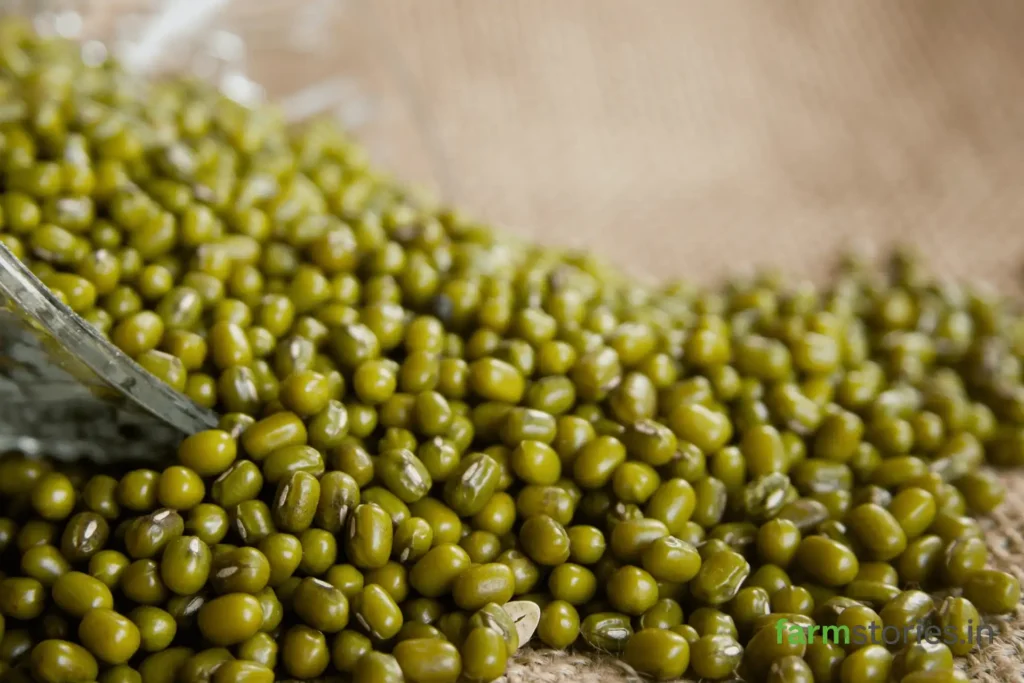
You might wonder what to do if the monsoon arrives so late that your main planting window closes completely. That’s exactly where green gram earns its place among the fastest low water kharif crops available. It completes its full life cycle in 60 to 70 days — fast enough to escape late-season drought entirely.
Water Need and What You’ll Save
Moong needs minimal water and because it grows so fast, it sidesteps the severe moisture depletion that destroys long-duration crops. It’s the emergency crop that actually delivers. One timely shower at the flowering stage can bump your harvest weight by up to 20%.
Best Use Case
Deploy moong in fields where your primary crop failed to germinate. It has instant liquidity at local mandis — you get cash back quickly, which matters when the rest of the season has been difficult.
4. Sorghum (Jowar)
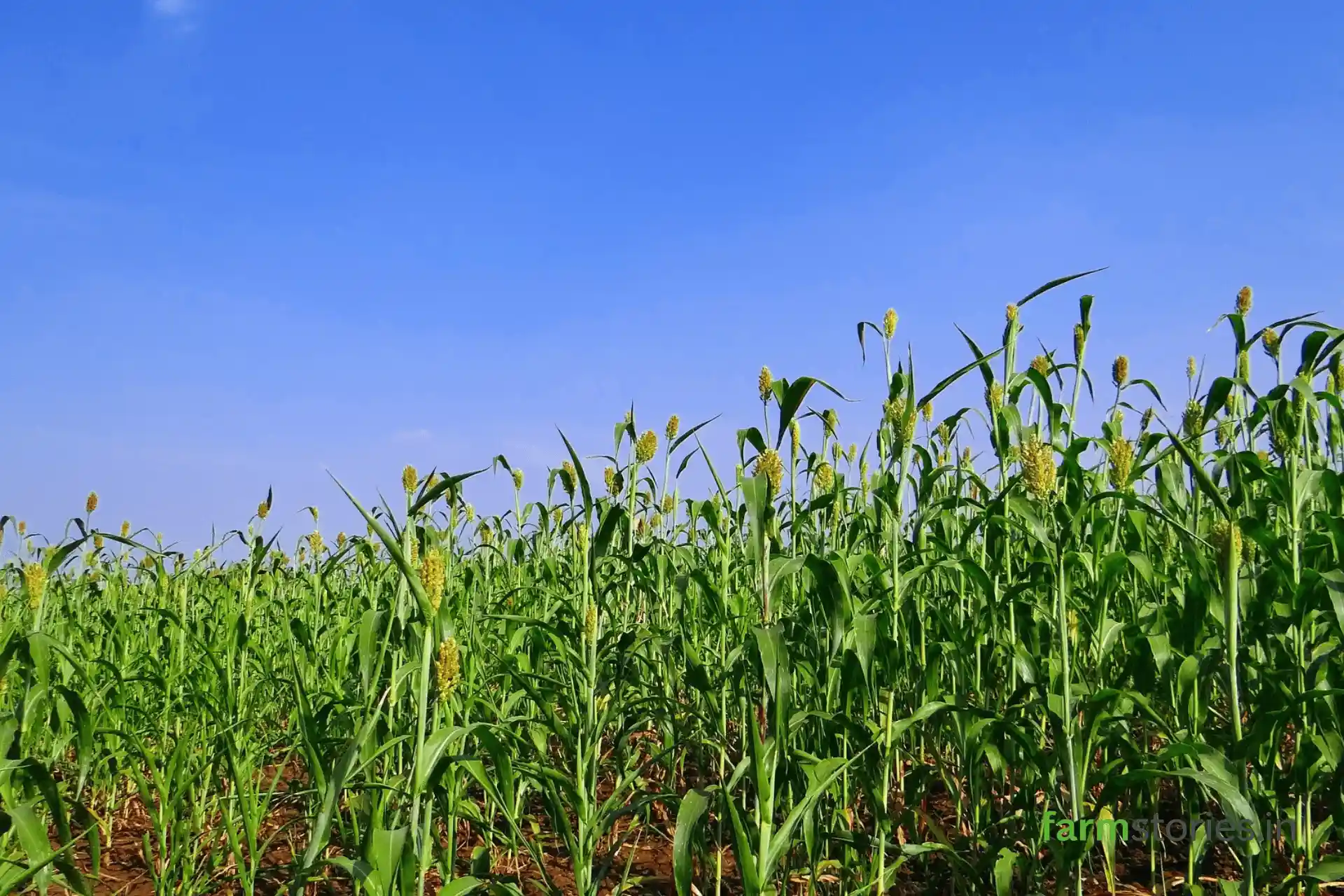
Jowar is a reliable staple across the Deccan Plateau, and there’s a biological reason it ranks among the toughest low water kharif crops in India. Its cellular structure lets the plant go virtually dormant during intense heat and then resume active growth the moment a light shower arrives. That’s not marketing language — it’s how the crop actually works.
Water Need and What You’ll Save
Jowar loses minimal moisture through its leaves compared to maize or finger millet. It stands through weeks of heat without drying out. It’s also a dual-purpose crop — grain for the market, stalks as premium dry fodder for dairy farmers who face massive green fodder shortages during dry seasons.
Best Variety to Plant
ICAR-Veer resists temperatures above 45°C and outperforms traditional varieties by 35% in grain yield and 50% in fodder quality. If grain prices dip, pivot to the fodder market. You won’t be stuck.
5. Black Gram (Urad)
Like moong, urad matures in 70 to 75 days, making it one of the quickest low water kharif crops you can grow in a shortened season. It thrives in warm conditions and handles moisture stress well once its root structure is established. But here’s something most guides don’t tell you: standing water does far more damage to black gram than mild drought ever will. A drier year is often exactly what this crop needs.
Water Need and What You’ll Save
Urad needs minimal irrigation and excellent drainage. Its adaptability to poor soil means it works well when you don’t want to risk better land on an uncertain season.
Maximize Your Returns
Before sowing, treat seeds with Rhizobium culture. It’s a simple step that maximizes nitrogen fixation from day one and cuts your synthetic fertilizer requirement by 25%. That directly improves your profit margin without any extra effort.
6. Sesame (Til)
Sesame is one of the most consistently overlooked low water kharif crops in the calendar. It stores moisture efficiently in a compact root system, needs very little fertilizer, and actually performs better in a dry year than a wet one.
Water Need and What You’ll Save
Til thrives on just 300 mm to 400 mm of total seasonal rainfall. Heavy downpours damage it. So a below-normal monsoon isn’t a problem — it’s an advantage for sesame growers.
Maximize Your Returns
Level your land carefully before planting to prevent any localised water stagnation. Use line sowing at a maximum depth of 2 cm for uniform germination. With domestic edible oil demand keeping prices strong, sesame gives excellent financial returns from even small acreage. It’s the low water kharif crop I’d recommend most to farmers working with under 2 acres who want a reliable cash income this season.
7. Groundnut
Groundnut needs slightly more initial moisture than millets, but it’s still firmly in the low water kharif crops category when you compare it to paddy or sugarcane. It manages mid-season dry spells well once established and is an excellent cash crop for loose, sandy loam soils.
Water Need and What You’ll Save
Groundnut needs steady moisture during two specific windows: pegging and pod development. Outside those windows, it’s surprisingly tough. Get the moisture right at those two stages and the rest of the season takes care of itself.
Maximize Your Returns
Apply gypsum at 200 to 250 kg per hectare during the pegging stage. This hardens the underground shells and improves seed quality. Well-formed pods fetch premium rates at the mandi — which is where your profit actually comes from with groundnut.
Low water kharif crops – Green Gram (Moong)
Soil Management That Makes Low Water Kharif Crops Work Harder
Choosing the right seed is only half the job. The other half is how you treat your soil before and after sowing.
Before planting any low water kharif crops, incorporate 5 tonnes of well-rotted Farmyard Manure per hectare into your fields. Organic matter acts like a sponge — it increases your soil’s water-holding capacity so every drop of rain stays near the roots instead of running off or evaporating.
Once crops emerge, practice dust mulching. Run a light hoe between crop rows after the first rain. This breaks the hard surface crust and creates a loose layer that stops subsoil moisture from evaporating into the heat. It’s an old technique, but field results consistently show it reduces moisture loss by up to 25%.
And if you want to reduce risk further, intercrop. Red gram and pearl millet in a 1:2 strip works especially well across most low water kharif crops — the millet establishes quickly, protects the soil, and the red gram builds up behind it while fixing nitrogen for the next season.
Choosing the Right Low Water Kharif Crops for Your Land
Not every crop on this list suits every field. Before you commit, ask yourself three things: How much rainfall does your area typically receive in a full season? What type of soil are you working with? And do you have even a small irrigation backup for critical crop stages?
If your seasonal rainfall is below 700 mm, millets and pulses are your safest low water kharif crops. If it’s between 700 mm and 900 mm with some backup available, groundnut and red gram open up. And if you’re in a region like Palakkad or Thrissur where the first flush is usually strong but the tail end of the monsoon fades — short-duration crops like moong and urad let you harvest before that late-season gap hits.
The farmers who do best with low water kharif crops aren’t the ones with the biggest budgets. They’re the ones who match their crop to their conditions and commit before the first rain falls, not after.
So plan now. The window to decide is shorter than most people think.
Want to see these techniques in action? Join our growing community of urban farmers by following farmstories on LinkedIn, Instagram, YouTube, and Facebook for daily tips, video guides, and harvest inspiration!