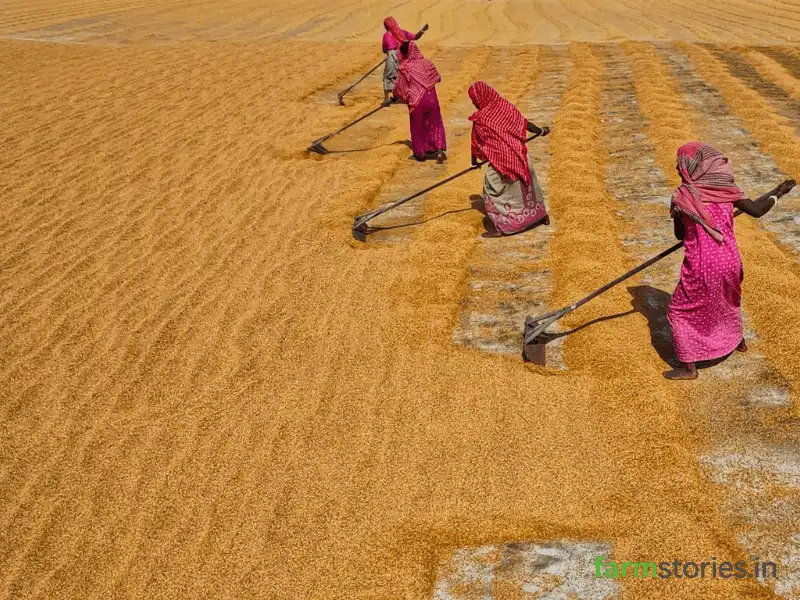
The Krishi Sakhi Program is rapidly transforming the landscape of Indian agriculture by turning rural women into certified agricultural para-extension workers. Officially known as the Krishi Sakhi Convergence Programme (KSCP), this nationwide initiative addresses critical gender gaps by providing resources, training, and decision-making power to women at the grassroots level.
The initiative gains global resonance as the United Nations and the Food and Agriculture Organization (FAO) observe 2026 as the ‘International Year of the Woman Farmer’. By formalizing a strategic partnership between the Ministry of Agriculture and Farmers’ Welfare (MoA&FW) and the Ministry of Rural Development (MoRD), the government has laid a solid foundation for sustainable rural development.
With the Agriculture Insurance Company of India Limited (AIC) driving widespread awareness campaigns, the Krishi Sakhi Program ensures that modern agricultural extension services reach the most remote doorsteps in the country.
The Kerala Budget 2026-27: A Strategic State Integration
State governments are actively integrating this central initiative into their local development frameworks to combat economic and environmental challenges. In the Kerala Budget 2026-27, presented by Finance Minister VD Satheesan, the state officially announced the implementation of the Krishi Sakhi Program to guarantee a strong, institutionalized presence of women in agriculture.
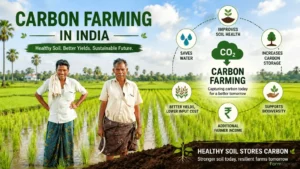
Through the strategic integration outlined in the Kerala Budget 2026-27, the state government is actively utilizing the Krishi Sakhi network to drive three interconnected agricultural priorities. Certified para-extension workers will directly advance local economies by leading regional farm tourism promotion initiatives and securing fair crop price assurance for smallholders by connecting them to direct market channels. Simultaneously, these trained professionals will serve as the primary ground force executing the state’s pioneering Kerala Carbon Farming and Soil Credit Framework, effectively transforming grass-roots climate resilience into measurable economic value for rural communities. Local institutions, such as the ICAR–Krishi Vigyan Kendra (KVK) in Idukki, have already begun organizing dedicated capacity-building programs to align local workers with these state-specific climate and economic goals.
Eligibility and the Lakhpati Didi Convergence Strategy
The selection strategy behind the Krishi Sakhi Program leverages existing community institutions to maximize efficiency and trust.
Key Eligibility Criteria
Demographics: Open to Indian women aged 18 years or older residing in rural areas.
Application Process: Managed offline through local agricultural department offices to maintain accessibility.
Community Footprint: Applicants must be active, practicing farmers with established leadership potential.
Synergies with the Lakhpati Didi Scheme
The program functions as a core component of the broader Lakhpati Didi initiative, which aims to help three crore rural women achieve a sustainable annual income of at least ₹1,00,000. Instead of training raw candidates from scratch, the Krishi Sakhi Program specifically recruits experienced women farmers from established Self-Help Groups (SHGs) under the Deendayal Antyodaya Yojana-National Rural Livelihoods Mission (DAY-NRLM).
By utilizing trusted community resource persons rather than outside agents, the government significantly reduces training friction and accelerates the local adoption of improved farming techniques. Out of the larger pool of tech-trained women under the Lakhpati Didi banner, the program targets the certification of thousands of dedicated agricultural extension specialists.
Join a community dedicated to sustainable cultivation. Subscribe to FarmStories below for free, authentic insights into modern agri-tech and organic farming methods.
Comprehensive Training Framework and MANAGE Certification
To ensure high-quality advisory services, the capacity-building architecture of the Krishi Sakhi Program is standardized and monitored by the National Institute of Agricultural Extension Management (MANAGE).
The 56-Day Core Curriculum
Selected candidates undergo a rigorous 56-day training schedule divided into eight foundational operational modules:
Agro-Ecological Practices: Managing crops from initial land preparation to final harvesting.
Farmer Field Schools (FFS): Leading hands-on, field-based education workshops for community groups.
Seed Banks: Establishing and maintaining community-led storage for resilient, traditional seed varieties.
Soil and Moisture Conservation: Practical monitoring of soil health and erosion control.
Integrated Farming Systems (IFS): Combining crop cultivation with livestock, poultry, and aquaculture.
Livestock Management: Implementing basic healthcare and feeding schedules for farm animals.
Bio-Inputs Management: Manufacturing and commercializing local biological alternatives to chemical inputs.
Soft Skills and Communication: Developing community mobilization, active listening, and presentation skills.
Certification and Evaluation
Following the core coursework, candidates undergo specialized refresher training focused on regional agricultural challenges. To secure their official credentials, candidates must clear a standardized proficiency test. Upon passing, they are formally designated as Certified Para-Extension Workers. To date, over 34,000 women have successfully achieved this certification out of the initial national target phase of 70,000 to 90,000 candidates.
Driving the National Mission on Natural Farming (NMNF)
A central pillar of the Krishi Sakhi Program is positioning certified women as primary “agriculture ambassadors” for the National Mission on Natural Farming (NMNF).
With specialized field training conducted at regional Krishi Vigyan Kendras (KVKs), these workers educate their communities on chemical-free, zero-budget natural farming. They provide practical, step-by-step training on how to prepare essential organic bio-inputs locally, including:
Beejamrut: An organic mixture used for protective seed treatment.
Jeevamrut: A potent liquid soil bio-stimulant packed with beneficial microorganisms.
Neemastra: A natural, neem-based pest repellent that eliminates the need for toxic chemical pesticides.
Additionally, they lead ground-level soil testing campaigns. By systematically collecting soil samples and distributing government Soil Health Cards, they help smallholders understand their land’s exact nutrient requirements, preventing the over-application of synthetic fertilizers.
Grassroots Responsibilities and Economic Impact
Certified workers under the Krishi Sakhi Program operate directly at the farmer’s doorstep, effectively bridging the structural gap between rural households and institutional agricultural benefits.
Diversified Revenue Streams
The program ensures strong economic viability for its participants. An active, certified individual can generate a stable income ranging from ₹60,000 to ₹80,000 per annum by delivering fee-based services tied to various central and state schemes:
Activity / Scheme
Operational Role
Financial Structure / Impact
Soil Health Framework
Sample collection and card distribution
Per-sample fee payment
Natural Farming Awareness
Leading SHG and Gram Panchayat workshops
Fixed institutional stipend
Local Resource Person (LRP)
Monthly monitoring for programs like MOVCDNER
Fixed fee of ₹4,500 per month
PM Fasal Bima Yojana
Crop insurance literacy and registration drives
Commission per successful policy
Agri-Enterprises
Running independent village bio-input retail shops
Independent business revenue
Holistic Social and Behavioral Outreach
Beyond core technical farming advice, the Krishi Sakhi Program integrates essential social outreach campaigns. The workers lead community awareness programs focusing on rural sanitation, general hygiene, and menstrual hygiene management for women working long hours in the fields. This holistic approach ensures that agricultural advancement coexists with improved quality of life.
Phased Implementation, State Progress, and Legacy
The rollout of the Krishi Sakhi Program follows a structured phased approach to ensure long-term operational sustainability.
Phase 1 Footprint
The initial implementation phase targets 12 focus states across India: Andhra Pradesh, Chhattisgarh, Gujarat, Jharkhand, Karnataka, Madhya Pradesh, Maharashtra, Meghalaya, Odisha, Rajasthan, Tamil Nadu, and Uttar Pradesh. Prime Minister Narendra Modi marked a major milestone for the project by personally distributing certificates to over 30,000 SHG-based workers during a national convention in Varanasi.
National Awareness Campaigns
To boost grass-roots visibility, the Agriculture Insurance Company of India Limited (AIC) structured a year-long, month-by-month promotional campaign. This included launching dedicated educational videos, holding high-profile walkathons under the hashtag #AICforHer, and organizing interactive regional workshops focused entirely on crop insurance literacy and risk mitigation.
The Future of Rural Agriculture
The Krishi Sakhi Program represents a structured evolution of previous government initiatives designed to support rural women farmers. By integrating the core frameworks of the Mahila Kisan Sashaktikaran Pariyojana and the Rashtriya Mahila Kosh, this new model secures long term financial viability for participants. The Krishi Sakhi Program succeeds because it transforms traditional self help networks into professional agricultural forces. As the national rollout expands across the initial twelve states, the Krishi Sakhi Program establishes a reliable and decentralized system that directly addresses local production challenges and soil health degradation.
The strategic inclusion of this initiative in the recent Kerala budget demonstrates how states can customize the Krishi Sakhi Program to meet urgent environmental goals. By linking certified workers to carbon farming and localized market pricing, the state maximizes the practical value of the Krishi Sakhi Program. This integration proves that the Krishi Sakhi Program operates as a permanent infrastructure for rural economic stability rather than a temporary welfare scheme. Choosing to expand the Krishi Sakhi Program secures a sustainable agricultural future driven directly by trained community leaders.
Want to see these techniques in action? Join our growing community of urban farmers by following farmstories on LinkedIn, Instagram, YouTube, and Facebook for daily tips, video guides, and harvest inspiration!