The potential for creating South Asia agriculture jobs stands at the most critical turning point in modern economic history. While traditional regional farming has historically focused on basic field cultivation, a groundbreaking global report highlighted by the World Bank Group reveals that a massive, untapped employment engine is hiding just beyond the farm gates.
According to official updates from the high-level regional dialogue co-hosted by India’s Ministry of Food Processing Industries (MoFPI) and the World Bank-led SAPLING initiative, the next phase of agricultural transformation lies entirely in off-farm infrastructure. By modernizing food processing ecosystems, strengthening climate-resilient cold chains, and upgrading cross-border agribusiness logistics, the region can unlock millions of sustainable South Asia agriculture jobs for its booming youth population while transforming into a global food systems powerhouse.
The South Asian Agri-Paradox: Big Footprint, Low GDP
To understand why a food systems transformation is so urgent, one must look at the structural paradox currently defining the region’s economy.
The broader agriculture sector currently employs a staggering 43 percent of the entire South Asian workforce. Yet, despite this massive human resource footprint and an overall agricultural sector market value exceeding USD 700 billion annually, farming contributes a mere 16 percent of the region’s total GDP.
This vast disparity points directly to a massive structural bottleneck: the majority of the region’s agricultural output is sold immediately as raw commodities without undergoing formal processing, refinement, or value addition. Millions of farmers work the fields, but the broader economy misses out on the highly profitable downstream revenue generated by manufacturing, advanced packaging, and commercial distribution networks.
The Massive Cost of Post-Harvest Food Waste
Compounding this economic imbalance is a critical post-harvest logistical crisis. Every single year, more than 30 percent of all food produced in South Asia is lost or wasted.
This is a staggering commercial and humanitarian loss. The volume of food lost annually across the region is enough to feed nearly 300 million people. Food rots in transit, deteriorates in substandard storage facilities, or spoils due to broken cold chains before it can ever reach urban consumers or industrial processing hubs.
Regional Agricultural Metric
Current Baseline Figure
Impact of Structural Transformation
Workforce Employment
43% of South Asian Population
Shift from low-income field tasks to high-value manufacturing roles
Total Sector Value
Over USD 700 Billion Annually
Drives a massive increase in overall regional GDP contribution past 16%
Annual Post-Harvest Loss
More than 30% of total regional yield
Salvaging lost food can comfortably feed approximately 300 million people
Processed Food Exports (India)
Surge from USD 4.9B to over USD 10B
Establishes the structural blueprint for surrounding nations
Unlocking Off-Farm Value: The Power of Food Processing
The solution presented by the World Bank Group does not require smallholders to plant more fields. Instead, it requires public and private sectors to build out a robust processing network. Expanding food processing, temperature-controlled storage, automated logistics, and commercial value addition can create millions of productive, stable South Asia agriculture jobs while simultaneously driving down post-harvest losses and multiplying rural incomes.
Join a community dedicated to sustainable cultivation. Subscribe to FarmStories below for free, authentic insights into modern agri-tech and organic farming methods.
When raw crops are converted into shelf-stable, packaged, or ready-to-eat products, the entire economic ecosystem changes:
Diversified Rural Employment: It builds off-farm employment infrastructure in semi-urban areas, offering high-quality manufacturing, engineering, quality control, and management jobs to the younger generation entering the workforce.
Income Stability for Smallholders: Food processors buy in bulk and contract early, shielding smallholder farmers from volatile daily wholesale market price crashes.
Global Export Expansion: Properly processed, certified food products easily break into premium international markets, drawing fresh foreign capital directly into the regional economy.
India’s Value-Chain Success Model
India serves as an active example of how targeted value addition pays off. Driven by strategic policy interventions like the Pradhan Mantri Kisan Sampada Yojana and the Production Linked Incentive (PLI) Scheme, India’s food grain production climbed past 330 million tonnes (up from just 51 million tonnes in 1950-51).
Backed by this volume, the nation’s processed food exports more than doubled over the last ten years, surging from USD 4.9 billion to over USD 10 billion. Currently, the food processing sector contributes around 9 percent of manufacturing value added and nearly 13 percent of India’s total exports. Yet, even with this progress, processed food accounts for only a small fraction of total employment, meaning the room for future job creation remains massive.
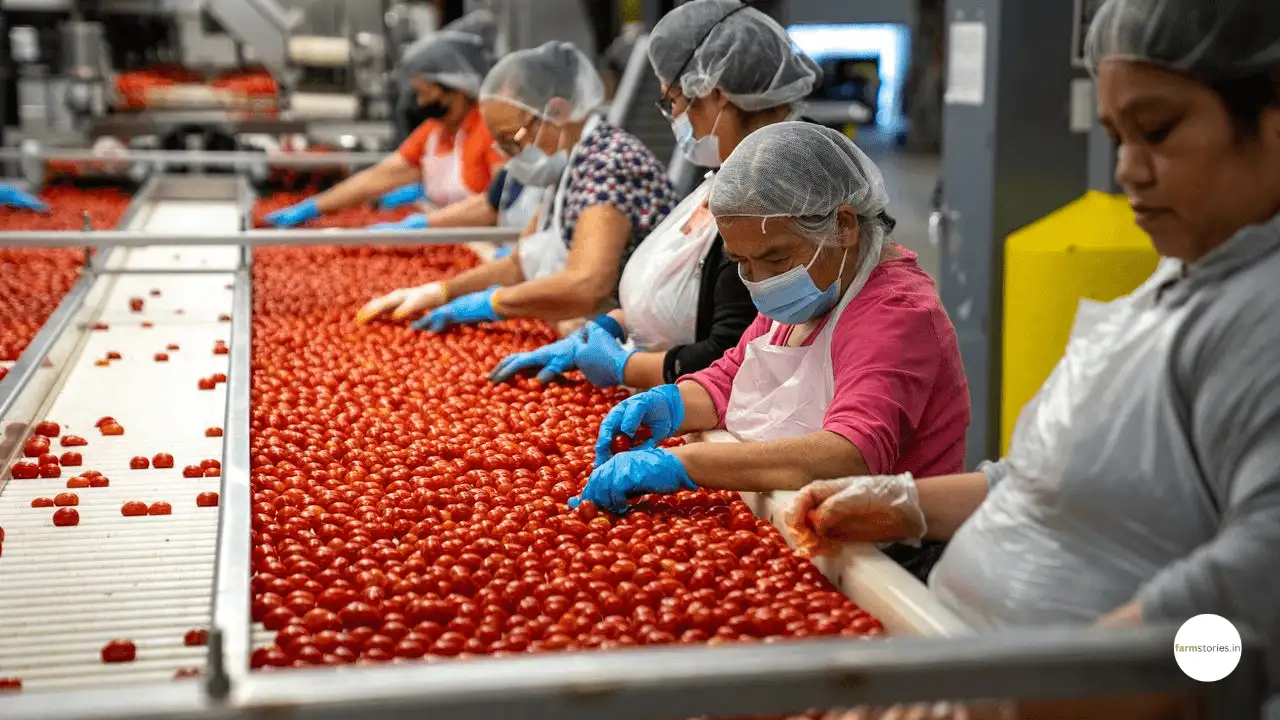
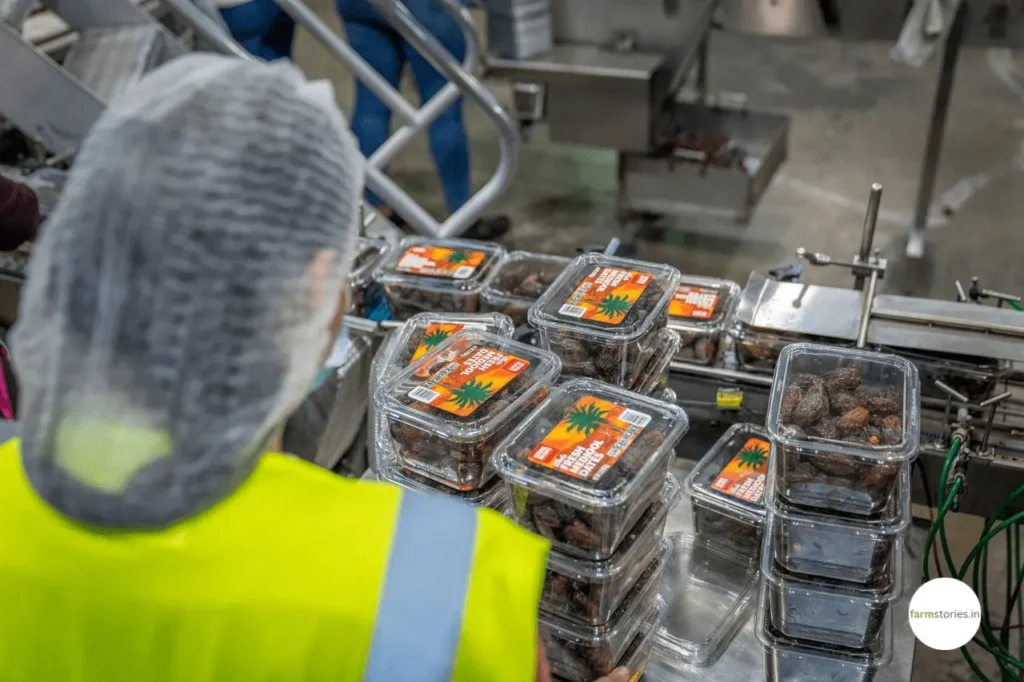
A modern food processing facility factory floor creating new South Asia agriculture jobs through automated crop sorting and packaging.
Global Engines of Change: AgriConnect and SAPLING Initiatives
To turn this regional potential into immediate reality, the World Bank Group is deploying a coordinated dual strategy through two interconnected platforms:
1. The SAPLING Initiative
The South Asian Policy Leadership for Improved Nutrition and Growth (SAPLING) initiative focuses heavily on high-level policy dialogues, regulatory alignment, and cross-border knowledge sharing. By bringing together leaders from India, Bangladesh, Sri Lanka, and neighboring countries, SAPLING helps create unified food safety guidelines, cross-border trade easements, and targeted incentives for private agribusiness investments.
2. The AgriConnect Platform
AgriConnect is a massive global platform designed with an ambitious milestone: connecting 300 million smallholders directly to modern markets by the year 2030. The platform actively drives new South Asia agriculture jobs by:
Mobilizing massive private capital investments into semi-urban food processing hubs.
Reforming outdated local agricultural market regulations to allow direct farm-to-factory sales.
Financing state-of-the-art cold chains, temperature-controlled transport networks, and automated storage facilities.
Action Plan: Steps for Sustainable Agribusiness Growth
For South Asia to comfortably step into its role as a global food systems leader, public and private sectors must focus immediately on four operational pillars:
1. Build Comprehensive Local Cold Chains
Governments must prioritize the construction of solar-powered cold storage units directly within rural farming clusters. Keeping crops cool immediately after harvest stops the 30% spoilage rate in its tracks, giving logistics networks time to move products safely.
2. Standardize Potting and Growing Quality
High-yield food processing requires premium, uniform raw inputs. Promoting clean, organic farming protocols inside regional kitchen gardens and smallholdings ensures that the fruits and vegetables coming off the field meet strict international processing and export standards.
3. Encourage Smallholder Crop Diversification
Processing factories thrive on variety. Moving smallholders away from strict rice-and-wheat monoculture toward high-value, high-demand cash crops like nutrient-dense green leafy vegetables, leafy spinach varieties, and organic hot spices creates a highly resilient commercial supply chain.
4. Upgrade Regional Agribusiness Logistics
Streamlining transport checkpoints, reducing bureaucracy at state borders, and adopting digital tracking systems ensures that fresh produce reaches food processing facilities at peak quality, maximizing manufacturing value.
A New Dawn for South Asian Food Systems
South Asia stands at a unique crossroads. Rapid urbanization, a booming middle class, rich agro-biodiversity, and rising consumer demand for safe, high-quality processed food are creating unprecedented opportunities for investment and innovation.
By executing the post-harvest infrastructure shifts championed by the World Bank Group, the region can solve two of its most critical modern challenges simultaneously: providing millions of high-quality South Asia agriculture jobs for its young workforce and securing a sustainable, waste-free food system for the world. The future of regional wealth is no longer just about growing more food—it is about adding value to every single grain harvested.
Want to see these techniques in action? Join our growing community of urban farmers by following farmstories on Instagram, YouTube, and Facebook for daily tips, video guides, and harvest inspiration!