If you want to build a profitable direct-to-consumer farm business, you first have to understand that the traditional agricultural supply chain is heavily stacked against the small-scale grower. For decades, the standard model has been to grow a crop, harvest it, and sell it to a wholesale distributor. The distributor takes it to a packing house, who sells it to a regional warehouse, who finally sells it to a grocery store.
By the time the consumer actually buys your vegetable, the price has been marked up by 400%. The heartbreaking reality? The farmer—the person who took all the physical and financial risk, fought the weather, and nurtured the seed—usually takes home less than 20% of the final retail price.
Build your Direct-to-Consumer Farm Business
If you want to build a profitable, resilient agricultural enterprise without requiring thousands of acres of land, you have to rewrite the rules. You need to bypass the supply chain entirely and build a direct-to-consumer farm business.
Here is the complete blueprint for taking back your profit margins and selling your harvest directly to the people who eat it.
What is a Direct-to-Consumer Farm Business?
At its core, a direct-to-consumer (D2C) model means you are the grower, the marketer, and the retailer. You interact directly with your end customer, whether that is a family in the next town over or a high-end chef in a nearby city.
When you eliminate the middlemen, two incredible things happen to your farm’s economics. First, you capture 100% of the retail price. Second, you become a “price maker” instead of a “price taker.” In the wholesale market, commodity buyers dictate what your crop is worth on any given day. In the D2C market, you set your own prices based on your actual costs, the quality of your organic practices, and the premium value of your brand.
The 3 Pillars of Farm-to-Table Economics
Transitioning to a D2C model doesn’t mean standing on the side of a dirt road hoping cars drive by. Modern D2C farms rely on three highly structured, scalable revenue streams.
1. Community Supported Agriculture (CSA) Subscriptions
The CSA model is the holy grail of farm cash flow. In a traditional farm, you spend thousands of dollars on seeds, compost, and labor in the spring, and you don’t see a single penny of revenue until the harvest in the fall.
Join a community dedicated to sustainable cultivation. Subscribe to FarmStories below for free, authentic insights into modern agri-tech and organic farming methods.
A CSA flips this timeline. Customers buy a “share” of your farm as a subscription before the growing season begins. In exchange for their upfront payment, they receive a weekly box of fresh, seasonal produce directly from your farm throughout the summer and fall.
The Business Benefit: You get the operating capital you need in the spring, completely interest-free. Furthermore, the risk is shared. If a late frost damages the tomato crop, the CSA members understand that their boxes will feature more root vegetables that week. A successful CSA is often the financial backbone of any profitable direct-to-consumer farm business.
2. Direct Farm-to-Restaurant Contracts
High-end restaurants and farm-to-table chefs are desperate for ingredients that haven’t been sitting in a refrigerated truck for two weeks. They want heirloom varieties, unique microgreens, and hyper-local stories they can print on their menus.
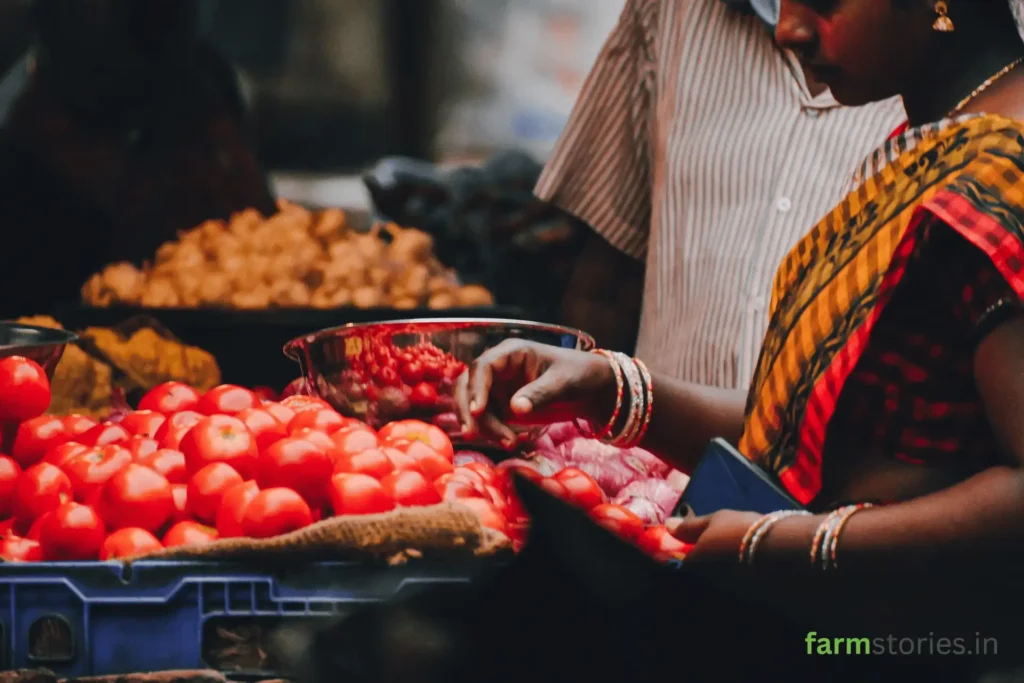
The Business Benefit: Instead of growing 10,000 standard red tomatoes for a wholesaler, you can grow 500 delicate, high-margin heirloom tomatoes and sell them directly to a chef at a premium price. Building relationships with just three or four local chefs can stabilize your entire business model. Selling to chefs is a phenomenal way to elevate the reputation of your direct-to-consumer farm business.
3. The Digital Farm Stand (Hyper-Local E-Commerce)
You don’t need a physical storefront to run a farm stand anymore. Successful D2C farms treat their website like a digital grocery store. Customers log on, see exactly what was harvested that morning, place an order, and the farm delivers it to specific local drop-off points or directly to their doorsteps on a set weekly route.
The Business Benefit: Unlike a physical farmers’ market where you have to guess how much produce to bring (and risk taking wilted vegetables home), an e-commerce model means you only harvest exactly what has already been sold and paid for. Your waste drops to absolute zero. E-commerce is no longer optional; it is a mandatory tool for a modern direct-to-consumer farm business.
Build a Direct-to-Consumer Farm Business: Sell Direct to Your Customers
The Hidden Costs: The Trade-Off of D2C
While keeping 100% of the retail price sounds phenomenal, it is vital to understand that a direct-to-consumer farm business requires a massive shift in your daily labor.
When you sell wholesale, your job ends at the farm gate. When you sell D2C, growing the food is only half the job. You are now running a logistics and marketing company. You must factor in the cost of high-quality packaging, the fuel and vehicle maintenance for delivery routes, and the software fees for your e-commerce platform. Most importantly, you must factor in customer service. You will spend time answering emails, updating social media, and managing subscription pauses for customers going on vacation. You are trading time on the tractor for time on the computer.
How to Start the Transition
If you currently sell wholesale, do not quit cold turkey. The safest way to build a direct-to-consumer farm business is to adopt a hybrid model.
Carve out 10% of your current acreage and dedicate it entirely to your new D2C experiment. Set up a simple email newsletter, offer a 15-person pilot CSA to your friends and local community, and practice the logistics of packing and delivering weekly boxes.
As your brand reputation grows and your waitlist expands, you can slowly scale back your low-margin wholesale contracts and allocate more land to your high-margin D2C customers. By reclaiming your relationship with the consumer, you are not just growing food—you are building a sustainable, resilient agricultural legacy.
Want to see these techniques in action? Join our growing community of urban farmers by following farmstories on LinkedIn, Instagram, YouTube, and Facebook for daily tips, video guides, and harvest inspiration!