If you live in an urban apartment or are trying to grow vegetables during the intense, overcast monsoon months, you have likely run into the same problem: your plants are stretching, looking pale, and eventually dying because they are not getting enough sunlight.
The traditional solution in India is to move plants to the balcony, but if your balcony is north-facing or shaded by other buildings, that is not an option.
Enter the Agri-Tech solution: Grow Lights for plants
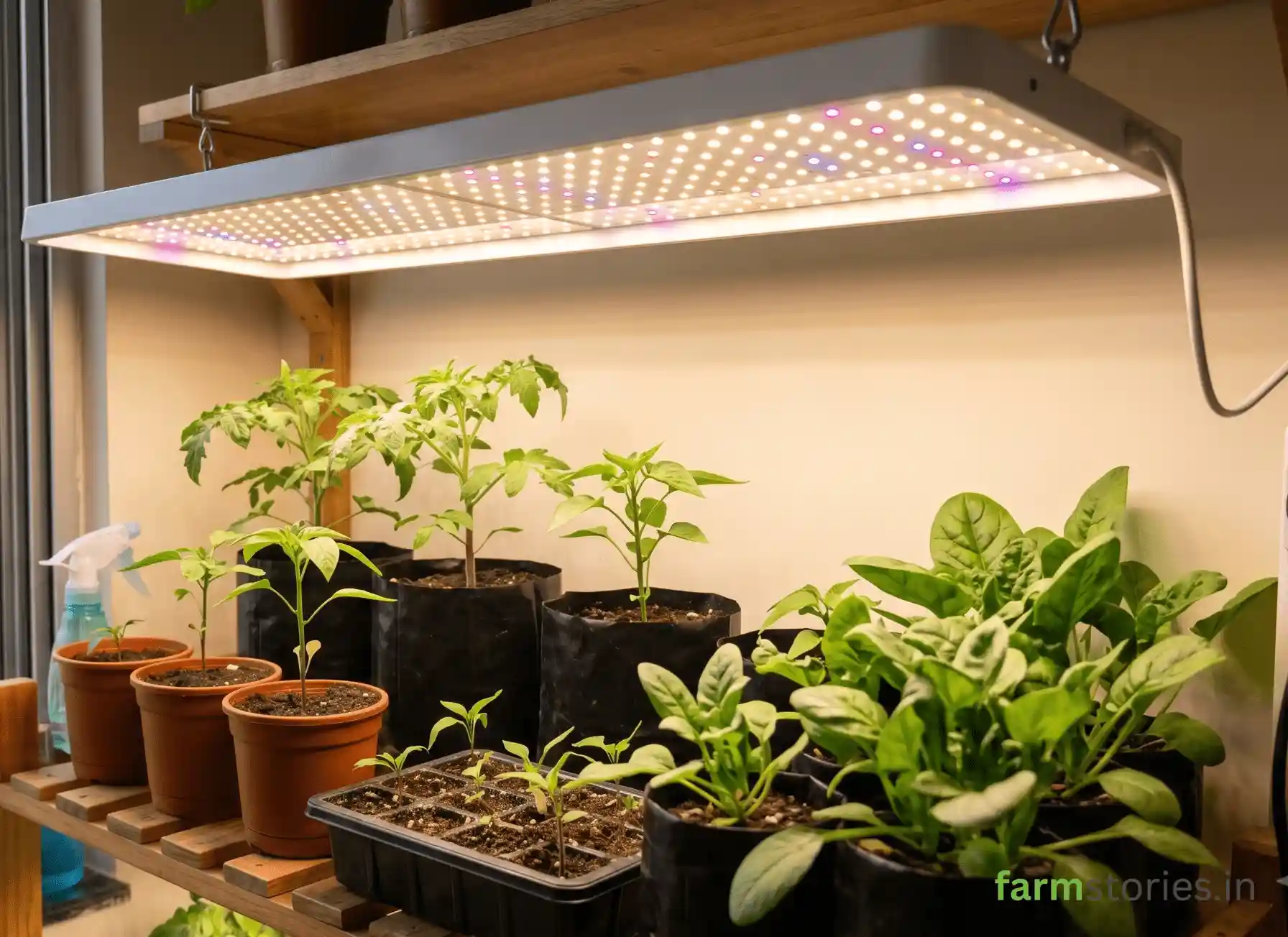
Once considered exotic and expensive, LED grow lights for plants are now accessible and affordable in the Indian market. They allow you to “grow your own sun” indoors, giving you the power to cultivate robust seedlings or even a full harvest of leafy greens right inside your living room or kitchen. Here is a simplified guide to choosing the right grow light for your home.
1. Understanding the Spectrum (Why Red and Blue Matter)
Natural sunlight contains all the colors of the rainbow. But plants, surprisingly, do not use all of them. They are highly efficient consumers of specific light ranges (the “Photo-synthetically Active Radiation” or PAR spectrum).
Blue Light: This is crucial for vegetative growth. If you are starting seedlings from scratch, grow lights with a higher concentration of blue light ensure strong, thick stems and prevent the plants from becoming “leggy” (stretching looking for light).
Red Light: This triggers the plant’s ability to flower and produce fruit. While less essential for initial seedlings, it is vital if you are trying to grow a tomato plant entirely indoors.
Agri-Tech Tip: Look for “Full-Spectrum” LED Grow Lights. These modern lights provide a balanced mix of red, blue, and white light that mimics the sun, covering all of your plant’s needs throughout its lifecycle.
Grow Lights for Plants: A Beginner’s Guide for Indoor Gardening
2. Choosing the Right Wattage and PAR
In the old days, we judged a light by its watts (brightness). In agri-tech, that rule is dead. Today, we look at how much usable light actually reaches the plant.
Join a community dedicated to sustainable cultivation. Subscribe to FarmStories below for free, authentic insights into modern agri-tech and organic farming methods.
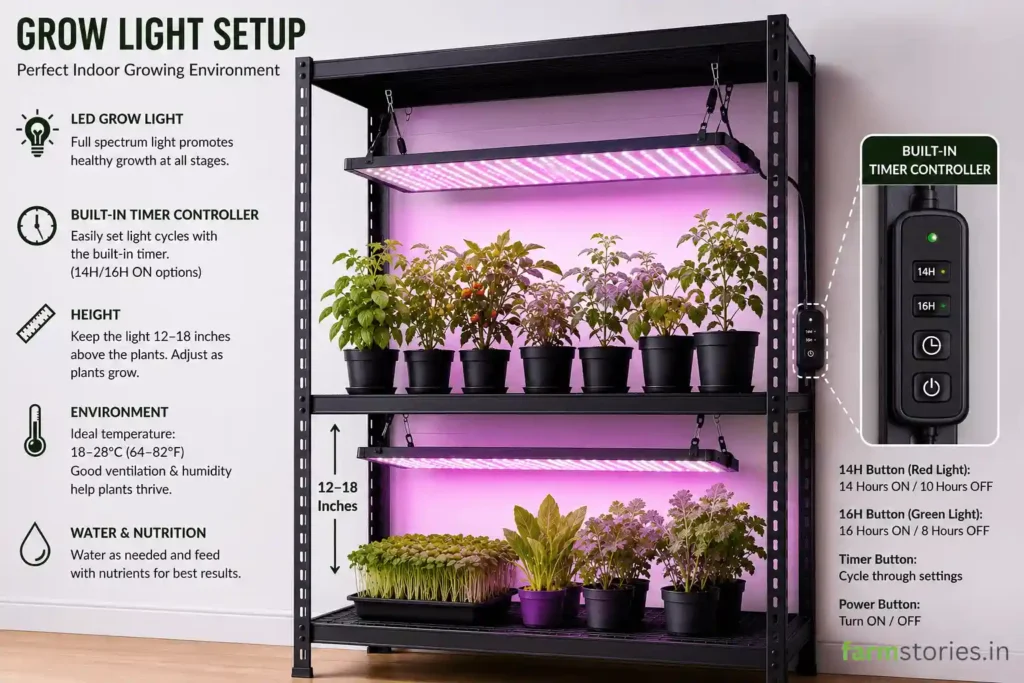
PPFD (PAR): This is the ultimate metric. PPFD measures how many photons of light hit a square meter of your plant per second. You will want a PPFD of about 150–300 for seedlings and leafy greens (spinach, microgreens) and a massive 600+ for fruiting plants like tomatoes or chillies.
Actual Power Draw: Since you will be running these lights for 12 to 16 hours a day, the cost of electricity matters. Look for efficient LED options that have a lower “actual power draw” but a high PAR output. A 100-watt LED grow light uses far less electricity than an old 100-watt bulb.
3. Grow Lights for Plants Style: Panels vs. Strips vs. Bulbs
Depending on what you are growing, the style of your light setup matters.
LED Panels: These are powerful, square-shaped lights. They are ideal if you have a dedicated growing rack with multiple shelves, providing deep penetration over a large area.
LED Strips/Bars: These are long, thin lights. They are perfect for mounting under a kitchen cabinet to grow a strip of microgreens, or along the inside edge of a bookshelf. They are highly adaptable and discreet.
LED Bulbs: These screw into a standard home socket. They are best for spot-lighting a single, specific pot.
By using Agri-Tech to provide consistent, optimized light, you are no longer limited by your balcony’s orientation. You are free to grow fresh, organic food anywhere in your home, 365 days a year.
Want to see these techniques in action? Join our growing community of urban farmers by following farmstories on LinkedIn, Instagram, YouTube, and Facebook for daily tips, video guides, and harvest inspiration!