The Right Way to Mix Neem Oil for Plants is something every home gardener must understand before using this powerful organic solution. Neem oil has been used for generations in India as a natural pesticide, helping gardeners control common pests like aphids, mealybugs, and spider mites without relying on harmful chemicals.
Despite its effectiveness, many beginners feel disappointed when their neem oil spray doesn’t work as expected. In some cases, it even damages plant leaves, causing burns and yellowing. The problem is rarely the neem oil itself—it is almost always the mixing method.
Understanding the correct way to prepare and apply neem oil spray can make the difference between a healthy, pest-free garden and a struggling one.
Why Neem Oil Fails Without Proper Mixing
To truly understand the right way to mix neem oil for plants, you need to know a simple scientific fact: oil and water do not mix naturally. If you pour neem oil directly into water, it will float on the surface instead of blending evenly.
When you spray this mixture, the first few pumps release only water, which has no effect on pests. As you continue spraying, the concentration of oil suddenly increases, which can lead to leaf burn. This uneven distribution is the main reason why neem oil sprays fail or damage plants.
The solution is to use an emulsifier—a substance that helps oil and water combine into a stable mixture. Without this step, even the best-quality neem oil will not work effectively.
The Perfect Neem Oil Spray Recipe for Home Gardening
Preparing neem oil spray correctly is the most important step in ensuring its success. When following the right way to mix neem oil for plants, accuracy in measurement and mixing order matters.
Start by taking a clean spray bottle and filling it with one liter of slightly warm water. Warm water helps the oil disperse more easily, but it should never be hot.
Join a community dedicated to sustainable cultivation. Subscribe to FarmStories below for free, authentic insights into modern agri-tech and organic farming methods.
Next, add 2 to 3 drops of a mild liquid soap. This can be a gentle dish soap or baby shampoo. The soap acts as an emulsifier, breaking the surface tension and allowing the oil to mix evenly with water. After adding the soap, shake the bottle lightly to distribute it.
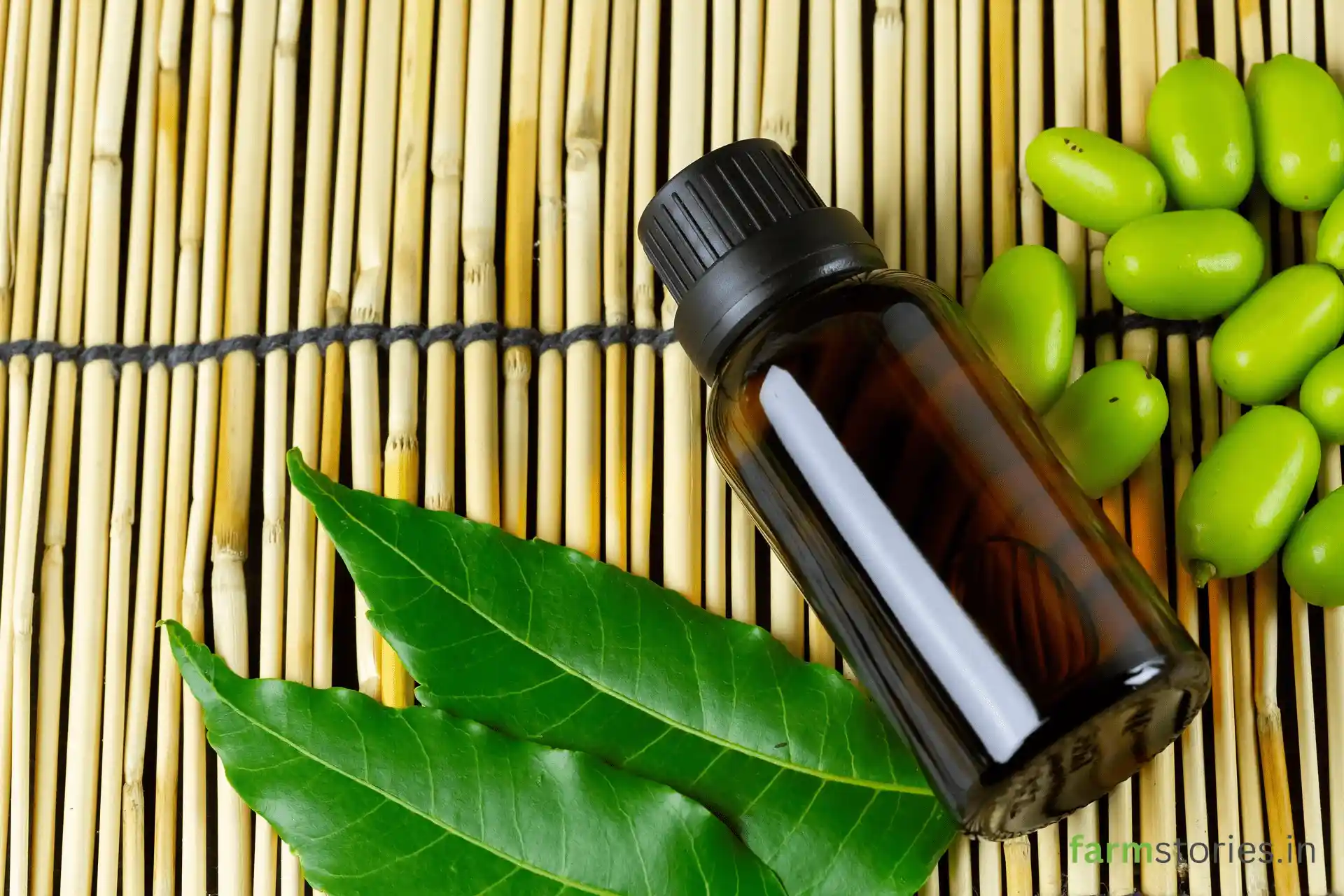
Now, add 5 ml of pure, cold-pressed neem oil. This is roughly equal to one teaspoon. It is important to use high-quality neem oil for the best results.
Close the bottle tightly and shake it vigorously. Within a few seconds, you should notice the mixture turning cloudy or milky white. This is a clear sign that the oil has properly emulsified and is ready for use.
This simple yet precise process ensures that the neem oil is evenly distributed in every spray, making it both safe and effective.
organic pest control using neem oil for plants
When and How to Spray Neem Oil Safely
Knowing the right way to mix neem oil for plants is only half the process. Proper application timing is equally important to avoid plant damage.
Neem oil should never be sprayed during the heat of the day, especially under strong sunlight. In Indian conditions, the sun can react with the oil on the leaves, leading to scorching or burning. This is one of the most common mistakes made by beginners.
The best time to apply neem oil spray is in the late afternoon or early evening. During this time, temperatures are lower, and the plant has enough time to absorb the solution without stress.
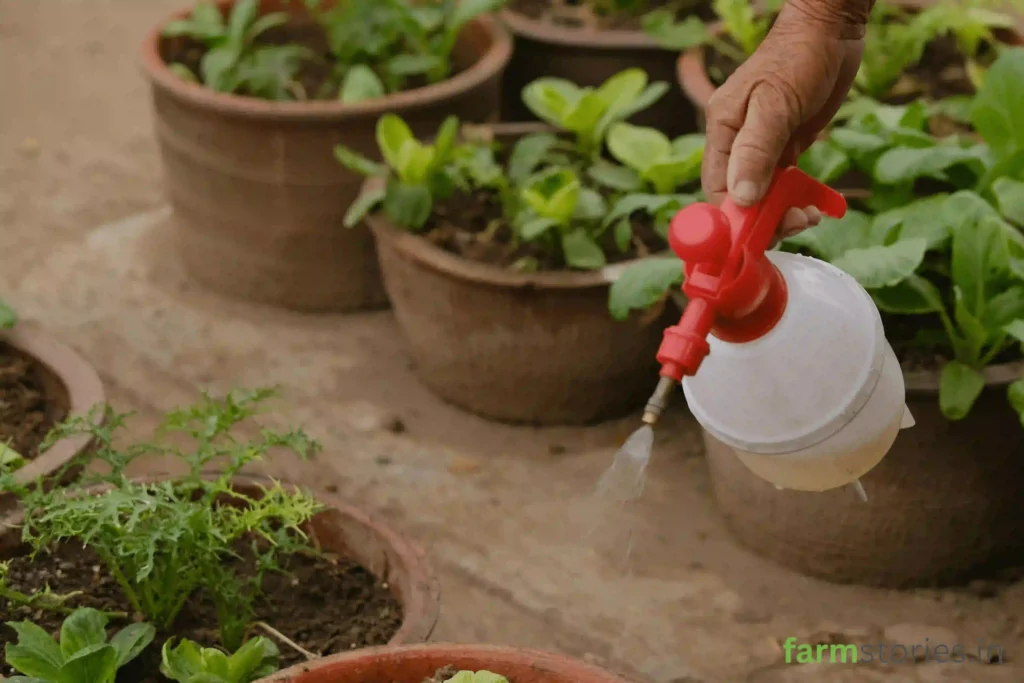
While spraying, make sure to cover the entire plant thoroughly. Pay special attention to the undersides of leaves, as this is where most pests hide and lay eggs. A light, even coating is enough; there is no need to drench the plant.
Regular application once every 7 to 10 days is usually sufficient for prevention. In case of a heavy pest attack, spraying can be done more frequently, but always with caution.
neem oil spray on plants in balcony garden
Creating a Consistent Pest Control Routine
Consistency plays a major role in getting the best results from neem oil. One-time spraying rarely solves pest problems completely. Instead, it is important to make neem oil a part of your regular plant care routine.
By following the right way to mix neem oil for plants and applying it at the correct intervals, you create an environment where pests cannot thrive. Over time, this reduces infestations and keeps your plants healthy without the need for chemical pesticides.
It is also important to prepare fresh solution each time you spray. Neem oil mixtures lose their effectiveness after a few hours, so avoid storing leftover spray for later use.
The Right Way to Mix Neem Oil for Plants is not complicated, but it requires attention to detail. A small mistake in mixing or timing can reduce its effectiveness or harm your plants. By using an emulsifier, maintaining the correct ratio, and applying the spray at the right time, you can fully unlock the benefits of this traditional organic solution.
For balcony gardeners and kitchen garden enthusiasts, neem oil remains one of the safest and most reliable tools for pest control. When used correctly, it protects your plants, improves their health, and ensures a chemical-free harvest.
Master this simple technique, and you will never struggle with pests the same way again.
Want to see these techniques in action? Join our growing community of urban farmers by following farmstories on LinkedIn, Instagram, YouTube, and Facebook for daily tips, video guides, and harvest inspiration!